
After years of hot walks, long hikes, and sticky workdays, I have stopped treating hydration as a race to finish a giant water bottle. The better approach is to start with a sensible daily baseline, add fluid for heat and sweat, and know when plain water stops being the right answer.
How much water do you actually need in summer?
The daily numbers are total water, not eight glasses of plain water
The best-known numbers are often misunderstood. The National Academies lists total daily water intake from beverages and food, not a fixed amount of water that every person must drink. Food supplies roughly 20% of total water for many adults, so your drinking target is lower than the headline number.
| Adult group | Total water per day | Approximate fluid equivalent | How I use the number |
|---|---|---|---|
| Women, ages 19 and older | 2.7 L | About 91 fl oz | A baseline, not a summer quota |
| Men, ages 19 and older | 3.7 L | About 125 fl oz | Includes water from food |
| Pregnancy | 3.0 L | About 101 fl oz | Follow prenatal guidance |
| Breastfeeding | 3.8 L | About 129 fl oz | Account for extra fluid loss |
Why summer changes the calculation
Heat, humidity, exercise, fever, vomiting, and diarrhea can raise fluid needs. A person sitting in an air-conditioned office does not need the same intake as someone mowing grass at 95°F. Start with the baseline, drink with meals, keep water available, and increase intake in small amounts when sweat loss rises. The National Academies water reference says higher intake is needed with physical activity or hot environments. The ACOG pregnancy guidance gives a separate target for pregnancy. Those numbers are more useful than forcing every adult into the same gallon-a-day rule.
When should you drink more than your usual amount?
Heat raises losses through sweat, not through a magic summer multiplier
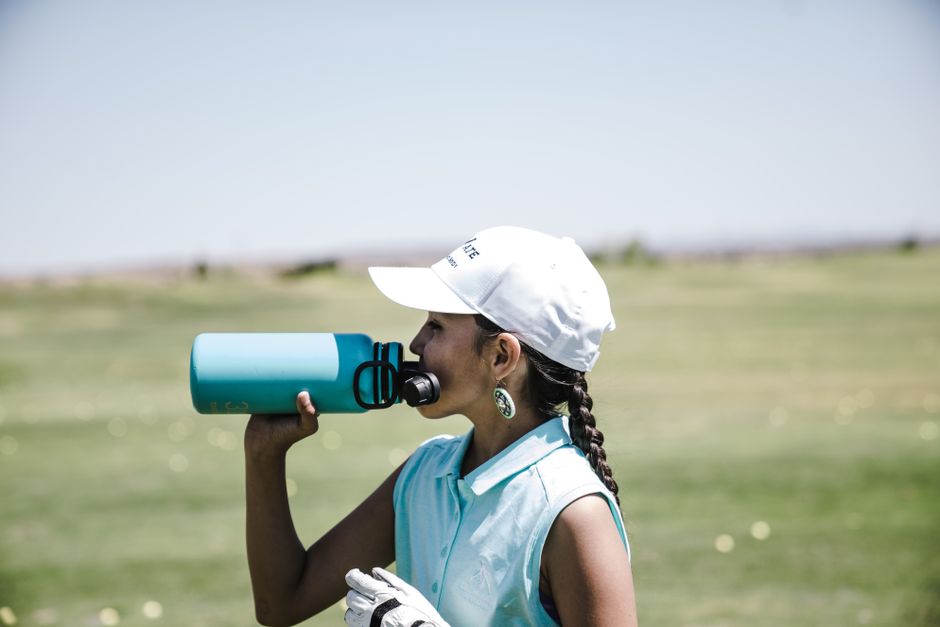
My rule is simple: add fluid when your body is losing more water than it normally does. Heat itself matters, but humidity, clothing, pace, shade, body size, and acclimatization matter too. A slow walk in dry heat may produce less sweat than hard work in humid weather. The same temperature can feel easy one day and punishing the next.
Use symptoms and circumstances together. If you are outdoors for several hours, sweating steadily, or working in protective clothing, drink regularly before you feel desperate. If you are resting indoors, a normal meal-and-drink pattern may be enough. Light-yellow urine usually suggests adequate hydration, but urine color can change with vitamins, food, and some medicines, so it is a rough clue rather than a laboratory test.
Activity, illness, and altitude can push needs higher
Exercise increases water loss through sweat and breathing. A fever, vomiting, or diarrhea can remove fluid quickly and may require medical advice, especially for children, older adults, and people with chronic illness. At altitude, faster breathing can increase water loss even when the weather feels cool. I do not respond to every hot day by doubling my intake. I respond to the actual exposure.
The CDC hydration guidance lists heat, physical activity, fever, vomiting, and diarrhea as situations that can raise water needs. That is the useful takeaway: the daily baseline is a starting point. The conditions around you decide how much extra fluid makes sense.
The hydration schedule I use for hot days
Before going outside
- Drink normally with breakfast or your next meal instead of trying to preload with a huge bottle.
- In the hour before a long walk or outdoor task, I drink roughly 12 to 16 fl oz in small portions. I reduce that amount if I am already well hydrated or if bathroom access will be difficult.
- Pack more water than the minimum needed for the route, plus a way to get shade or cool down. Hydration cannot compensate for staying in direct heat too long.
During and after the activity
- For moderate work in heat, a practical starting point is about 8 fl oz every 15 to 20 minutes. That workplace rule comes from CDC and NIOSH heat guidance, but it is not a command to force fluid when you feel full, nauseated, or bloated.
- Take cooling breaks before dizziness, headache, or weakness appears. Shade, airflow, loose clothing, and an earlier start often reduce fluid needs more effectively than another sports drink.
- Afterward, return to ordinary drinking and eat a normal meal. If you remain dizzy, confused, unusually weak, or unable to keep fluids down, treat that as a health problem rather than a reason to keep chugging.
This schedule works best for ordinary outdoor activity. Endurance events lasting several hours need a personal plan based on sweat rate, body weight, pace, weather, and medical history.
Do you need electrolytes or just water?
Is water enough for a normal summer day?
Yes. For errands, office days, short walks, and workouts under about an hour, plain water is my first choice. Normal meals provide sodium and other minerals, and sports drinks add sugar or sweeteners that many people do not need. I would not buy an electrolyte product just because the weather app says 90°F.
When do electrolytes make sense?
Electrolytes become more useful during several hours of heavy sweating, repeated training sessions, very salty sweat, or an activity where replacing sodium and carbohydrate helps you keep going. They do not make unlimited drinking safe. The goal is to replace part of what you lose, not to turn every bottle into a supplement.
Which products are reasonable examples?
For a lower-sugar option, I prefer Nuun Sport for a long workout: one tablet makes 16 fl oz and provides 300 mg sodium, 150 mg potassium, and 1 g sugar; a 10-tablet tube often costs about $8. For heavier sweat loss, Pedialyte Sport Powder is the stronger electrolyte choice, with 650 mg sodium, 600 mg potassium, 7 g sugar, and 40 calories per packet; a six-pack commonly costs about $11. Liquid I.V. Hydration Multiplier is convenient but sweeter, with roughly 500 mg sodium and about 11 g sugar per packet depending on flavor; a 16-stick box often costs around $25. My verdict is clear: use water for ordinary hydration, Nuun Sport for modest electrolyte replacement, and Pedialyte Sport for longer, sweat-heavy sessions. Liquid I.V. is a convenience product, not an all-day requirement. Check each current label because formulas and prices change.
The hydration mistakes that make summer worse
My strongest opinion: stop treating water loading as preparation
Drinking several liters before a hike or race does not create a useful reserve. Your kidneys remove excess water, and very rapid intake can dilute blood sodium. Exercise-associated hyponatremia is uncommon but serious; it has been reported when people drink beyond thirst during long events, especially in heat. A swollen feeling, nausea, headache, confusion, or worsening fatigue after aggressive drinking is not proof that you need another bottle.
Five mistakes I avoid
- Waiting until you feel wrecked: For long heat exposure, drink regularly and take cooling breaks before thirst becomes intense.
- Using sports drinks all day: Many contain added sugar and calories. They solve a narrow problem, not every hydration problem.
- Taking salt tablets casually: Salt needs vary, and tablets can be risky without a clear plan. Ordinary meals are enough for most people.
- Chasing perfectly clear urine: Pale yellow is a reasonable sign. Completely clear urine all day may simply mean you are drinking more than needed.
- Ignoring medical restrictions: Heart failure, kidney disease, liver disease, diabetes, pregnancy, and water pills can change the safe plan. Ask your clinician for a personal target.
My practical verdict is to fix the environment first: shorten the exposure, find shade, wear lighter clothing, and eat normally. Buying a powder cannot repair an unsafe heat plan.
Summer hydration cheat sheet: water, electrolytes, or medical help?
The short decision rule
For a normal summer day, drink to thirst around meals and keep water nearby. For sustained sweating, drink at regular intervals and consider sodium and carbohydrate when the session lasts several hours. For illness, fluid restriction, or severe symptoms, use medical guidance instead of a generic bottle goal.
Use the situation, not the marketing, to choose
There is no prize for finishing the largest container. The best choice is the smallest intervention that matches the problem: water for routine losses, an electrolyte drink for prolonged heavy sweat, and professional care for symptoms that do not fit ordinary thirst. This table is the version I keep in mind when summer plans get complicated.
| Situation | Best first choice | Useful cue | What to avoid |
|---|---|---|---|
| Normal indoor day or short errand | Water and regular meals | Thirst, meals, pale-yellow urine | Forcing a gallon |
| Moderate outdoor work for 1–2 hours | Water in small, regular drinks | About 8 fl oz every 15–20 minutes as a starting point | Waiting for severe dizziness |
| Several hours of heavy sweating | Water plus planned electrolytes and food | Breaks, sweat rate, symptoms, and activity length | Water loading or salt tablets without guidance |
| Vomiting or diarrhea | Medical advice and an appropriate rehydration plan | Unable to keep fluids down, reduced urination, worsening weakness | Relying on soda or alcohol |
| Confusion, fainting, seizure, or collapse | Emergency services and rapid cooling | Altered mental state or loss of consciousness | Forcing a drink into the person |
Always consult a qualified healthcare professional before making health-related decisions.