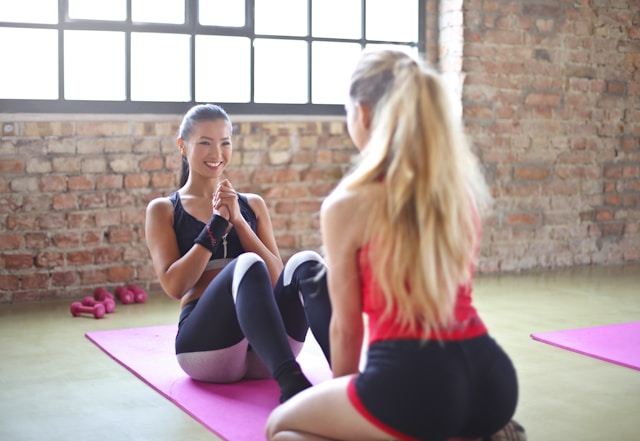
A useful workout outfit lets you move freely, manages sweat and suits the conditions around you. You can still choose colours and styles you enjoy, but comfort deserves first place. A waistband that slips during squats or shoes that pinch halfway through a walk can quickly become a distraction.
You do not need a large collection of specialist clothing to get started. Build around the activities you actually do, then add pieces when they solve a specific problem. These essentials will help you put together a practical kit for the gym, home workouts and outdoor exercise.
Choose fabric for the effort you expect
Think about how warm and sweaty your session is likely to be. For a demanding circuit or indoor cycling class, lightweight fabric that moves moisture away from your skin and dries readily can feel more comfortable than a heavy, absorbent top. Polyester and nylon are common options, although the fabric’s construction and thickness matter as well as its fibre content.
Elastane, also called spandex, adds stretch to many leggings, shorts and tops. It helps clothing move with you, but its presence alone does not tell you how well a garment handles sweat. Merino wool is another option for base layers, particularly when conditions are cool. Check the care label before buying, since different fabrics need different treatment.
Cotton can be perfectly comfortable for gentle stretching, a short walk or a low-sweat session. During harder exercise, it may hold moisture and feel heavy or clammy. Rather than ruling out a material completely, match it to your workout and personal comfort. Check seams and labels too: a rough edge that seems minor in the changing room can become irritating with repeated movement.
Test the fit through real movements
Workout clothing should stay in place without restricting your breathing or range of motion. Close-fitting garments can be useful when you want fabric clear of equipment, while a looser cut may feel more comfortable for walking or casual training. Neither fit is automatically better; the important question is whether it works during your chosen activity.
Before removing the tags, try a few movements you expect to use:
- Squat and lunge to check that waistbands stay secure and seams do not pull.
- Reach overhead to see whether your top rides up or limits your shoulders.
- Bend forward to check coverage and whether leggings become see-through when stretched.
- Walk briskly or jog in place to notice bouncing pockets, rubbing or sliding fabric.
Look for shorts with enough room through the hips and thighs, and leggings that do not require constant adjustment. Drawstrings can help fine-tune a waistband. Avoid very loose hems or dangling cords near moving gym equipment. If a garment leaves you thinking about it throughout every movement, try another size or cut.
Make support and socks part of the basics
If you wear a sports bra, choose support appropriate to the movement. Running and jumping usually call for more support than gentle yoga or walking. The band should feel secure, the cups should contain the breasts comfortably, and straps should stay put without digging in. Try a few activity-specific movements to assess comfort before committing.
Underwear should also feel comfortable beneath your chosen bottoms, with seams and edges that do not rub. Some workout shorts have a built-in liner; try them as designed and follow the manufacturer’s guidance. There is no need to add layers that bunch up or make you unnecessarily warm.
Socks deserve as much attention as the shoes over them. Choose a pair that fits smoothly without folds, with a cuff that stays in place. Moisture-managing fabrics can help feet feel less damp during sweaty sessions. Take your usual workout socks when trying on shoes, since a thick hiking sock and a thin gym sock can change the fit noticeably.
Match shoes to your main activity
Choose footwear for what you will do most often. Running shoes are designed around repeated forward movement, while training shoes may provide a broader, more stable base for gym exercises and changes of direction. For court sports, look for footwear intended for that surface and its sideways movements. One pair may cover several casual activities, but it should feel suitable for each.
Fit matters more than a logo or a technical-sounding description. Your toes need room to move, your heel should feel secure, and there should be no pinching or pressure points. Try both shoes, lace them properly and walk around. Do not rely on a painful pair becoming comfortable after several workouts.
For outdoor routes, consider the surface as well as the weather. Trail shoes can offer tread suited to uneven ground, but aggressive tread is not necessary for every paved walk. Waterproof footwear may be useful in wet conditions, although it can feel warmer and does not stop water entering over the collar. Check worn soles and damaged uppers regularly, and seek fitting advice if you struggle to find a comfortable pair.
Use layers to manage changing conditions
Outdoor clothing needs to work as your effort and the weather change. Start with a comfortable base layer, then add insulation if needed and an outer layer suited to wind or rain. Several manageable layers give you options when you warm up, pause or head home.
For a cool-weather walk, that might mean a lightweight top, a fleece and a wind-resistant shell. A harder run may need less insulation because you generate more heat. Check the forecast and consider the route, duration and places where you could get shelter. A short loop near home requires different preparation from a long outing in an exposed area.
In warm conditions, choose light, breathable clothing and adjust your plans to the heat. A brimmed hat and suitable sun protection can be useful outdoors. In cold weather, gloves and a hat are easy additions to carry. Keep a dry layer available for after a sweaty session, especially if you will be waiting outside or travelling home.
Keep accessories useful and unobtrusive
Add accessories to solve a practical need. A secure pocket or comfortable belt can hold keys without bouncing. A hair tie or headband can keep hair out of your eyes. For exercise in low light, consider reflective details and appropriate lights so other people can see you; clothing colour alone is not enough.
A watch or fitness tracker is optional. If you use one, make sure it sits comfortably and does not interfere with wrist movements. Remove jewellery that could catch on equipment, and check any clothing requirements at your gym or class. Carrying fewer unnecessary items often makes a workout simpler.
Build a small kit you can maintain
Start with comfortable shoes, suitable socks, a couple of tops and bottoms, and any support garments you need. Add weather layers according to your routine. Favourite colours or a team shirt can make the kit feel personal, provided the fabric and fit suit the session.
After exercise, let damp items dry rather than leaving them bundled in a bag. Wash according to the label, paying attention to instructions about heat and fabric softener. Before your next session, check for rough seams, stretched waistbands and worn footwear. The best workout outfit is one you can put on, move comfortably in and then stop thinking about while you exercise.