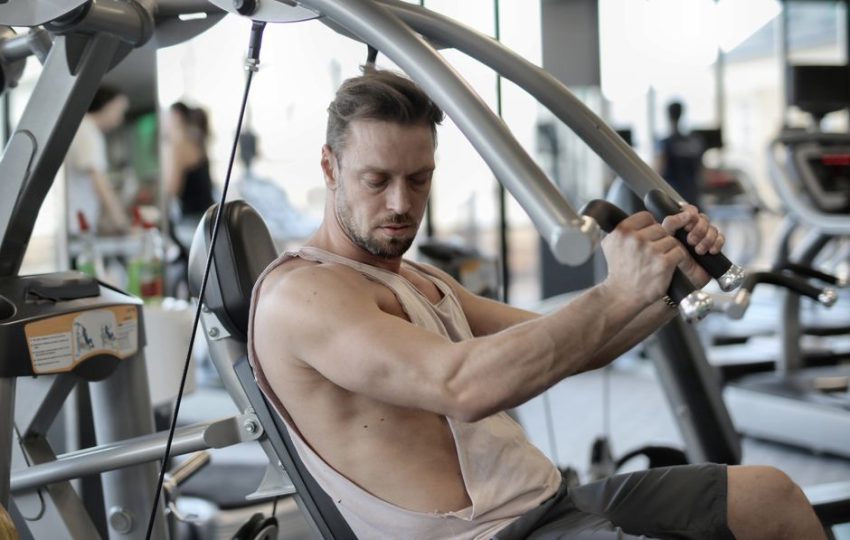
Progressive overload is the simplest reliable way for a beginner to get stronger: repeat a lift, keep the form controlled, then make one small part of the challenge harder. That may mean adding 5 pounds, completing one extra repetition, or using the same load with better control. You do not need a brutal workout, daily training, or a crowded gym.
The best beginner plan is boring enough to repeat and clear enough to measure. Use three full-body sessions each week, leave at least one rest day between them, and stop most sets with one or two good repetitions still available. Strength comes from giving your muscles a reason to adapt, then giving your joints, sleep, and nervous system enough time to recover.
What Progressive Overload Means for a New Lifter
Progressive overload does not mean lifting to failure every session. It means increasing the training demand after your current workload becomes manageable. The increase must be small enough that your range of motion, posture, and speed stay under control. If your knees cave during a squat or your back rounds during a row, the weight is not ready to go up.
Start with a repeatable baseline
Pick a load that lets you complete 8 to 12 repetitions with steady movement. For a first dumbbell goblet squat, that might be a 20-pound dumbbell. For a dumbbell bench press, it might be two 15-pound dumbbells. These numbers are examples, not targets. The correct starting weight is the one that lets you finish the set while keeping about two clean repetitions in reserve.
Change one training variable
Track four variables: load, repetitions, sets, and rest time. Change only one at a time. If you perform three sets of 8 with 30-pound dumbbells, a sensible next step is three sets of 9 or 10 with the same weight. Once you reach three sets of 12 with solid form, move to 32.5 pounds and return to three sets of 8. This double-progression method gives beginners a clear rule instead of relying on mood.
Verdict: Start lighter than your ego wants, record every working set, and progress only after the present load looks controlled.
The Four Levers That Make Training Harder
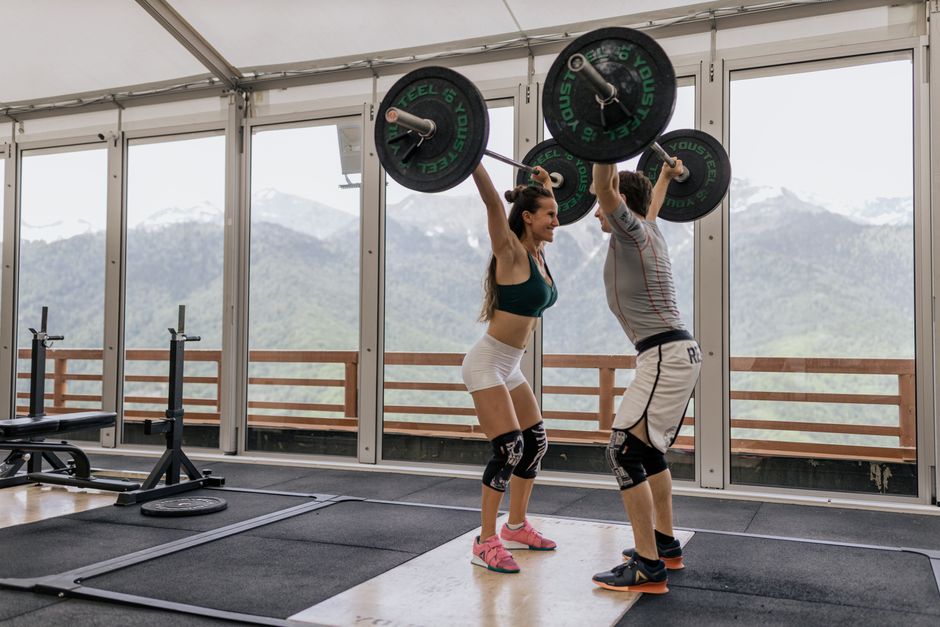
Beginners often treat heavier weights as the only form of progress. That approach creates avoidable stalls. A workout can become more demanding through four different levers, and the smartest first-year lifter uses the smallest lever that produces progress.
- Load: Add 2.5 to 5 pounds to an upper-body lift or 5 to 10 pounds to a lower-body lift after you reach the top of your repetition range.
- Repetitions: Add one repetition per set while the load stays fixed. This works well for dumbbell rows, split squats, and presses.
- Sets: Add one set only when the current sets feel easy and recovery remains good. Moving from three sets to four raises weekly work quickly.
- Technique and range: Pause for one second at the bottom of a push-up, lower a squat for three seconds, or use a fuller pain-free range of motion.
Rest time is another tool, but it should not be your first progression method for strength. Cutting rest from two minutes to 45 seconds makes a session more tiring, yet it may reduce the weight and repetitions you can perform. For compound lifts, rest two to three minutes. For smaller movements, 60 to 90 seconds is usually enough.
Do not increase load, repetitions, sets, and difficulty at once. That makes it impossible to know what caused a sore elbow, a stalled lift, or a poor workout. A beginner should earn progress through consistency first.
Verdict: Add repetitions before weight, use technique changes carefully, and save extra sets for periods when recovery is clearly strong.
A Three-Day Strength Plan That Is Easy to Measure
Train on Monday, Wednesday, and Friday, or use any schedule that leaves one full day between sessions. Perform the exercises in the listed order. Begin with five minutes of easy movement and two lighter practice sets for the first major lift. The working sets below exclude warm-up sets.
- Session A: Goblet squat, 3 sets of 8 to 12; dumbbell bench press, 3 sets of 8 to 12; one-arm dumbbell row, 3 sets of 10 per side; Romanian deadlift, 2 sets of 8 to 10; plank, 3 sets of 20 to 40 seconds.
- Session B: Romanian deadlift, 3 sets of 8 to 10; standing dumbbell press, 3 sets of 8 to 12; split squat, 3 sets of 8 per leg; assisted pull-up or band pulldown, 3 sets of 8 to 12; farmer carry, 3 rounds of 30 to 40 seconds.
- Weekly order: Week one uses A, B, A. Week two uses B, A, B. This gives each movement pattern regular practice without turning every day into a test.
- Progression rule: Add one repetition to each set when you can do so without changing form. Add weight only after every set reaches the top of its range.
- Deload rule: If two workouts in a row feel unusually slow, reduce the load by 10% and perform one fewer set for one week.
Keep a simple log with the date, exercise, load, repetitions, and a short note about form. A log beats memory because beginners often remember the hardest set and forget the three weeks of steady improvement that came before it.
Do not add five extra arm exercises just because the main session feels short. The plan already trains the squat, hinge, push, pull, carry, and trunk-bracing patterns that build a useful base.
Verdict: A three-day full-body plan wins for beginners because it provides frequent practice, enough recovery, and obvious numbers to improve.
Beginner Equipment Compared by Cost and Flexibility
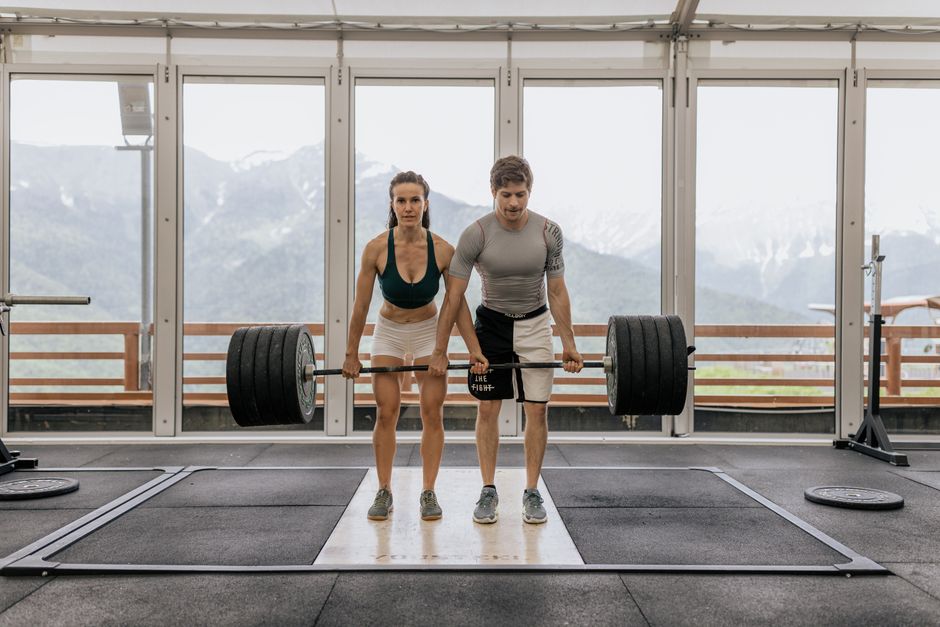
You can build strength with body weight, a backpack, resistance bands, dumbbells, or a barbell. Equipment is useful when it makes progression easier to measure, not because expensive gear creates better muscles. For most beginners, adjustable dumbbells provide the best balance of space, cost, and exercise variety.
| Equipment | Typical 2026 U.S. price | Best use | Main drawback |
|---|---|---|---|
| CAP Barbell 150-pound adjustable set | About $180 to $230 | Low-cost home squats, rows, presses, and deadlifts | Plates take time to change |
| Bowflex SelectTech 552 adjustable dumbbells | About $429 to $549 | Fast weight changes from 5 to 52.5 pounds per hand | Higher price and delicate adjustment system |
| REP Fitness AB-3100 bench | About $319 | Stable pressing, rows, and split-squat support | Uses valuable floor space |
| Rogue Ohio Bar | About $295 | Long-term barbell squats, presses, and deadlifts | Needs plates, rack, and safe flooring |
| Nike Metcon 9 training shoes | About $150 | Stable foot support for lifting and general gym work | Not ideal for long-distance running |
The cheapest useful setup is a backpack loaded with books, a resistance band, and a clear progression log. The most practical paid setup is adjustable dumbbells plus a stable bench. A barbell becomes the better choice once you have enough room, know the basic lifts, and want to train heavier with a rack and spotter arms.
Be careful with payment plans. Cash is the cleanest option. If a retailer offers financing, a genuine 0% APR plan with no deferred-interest clause and no annual fee is safer than a 24.99% to 29.99% APR credit balance. Late fees often range from $25 to $39, which can erase any equipment discount. This is not financial advice; it is a reminder to treat exercise equipment as a purchase, not a reason to carry expensive debt.
Bottom Line: Buy adjustable dumbbells first if space is limited, choose a barbell setup only when you can train safely, and skip financing that turns a $300 purchase into a much larger bill.
How Heavy Should a Beginner Lift?
The right starting weight is not the heaviest load you can move once. It is the heaviest load you can control for the planned repetitions. Use the questions below before increasing a lift.
How close should I train to failure?
Finish most working sets with one or two repetitions left in reserve. If you planned 10 repetitions but could have completed 14, the load may be too light. If repetition 7 causes your back to twist or your range of motion to shrink, the load is too heavy. This middle zone gives you enough effort for adaptation without turning every set into a test of survival.
When should I add weight?
Add weight after you reach the top of the planned range on every set for two workouts. For a 3-by-8-to-12 program, that means completing 12, 12, and 12 with consistent form. Increase an upper-body movement by the smallest available jump, often 2.5 or 5 pounds total. For a lower-body movement, 5 to 10 pounds may be reasonable if your technique stays unchanged.
What if the next weight is too large?
Use a bridge. Add repetitions, slow the lowering phase to three seconds, or add a one-second pause while keeping the same load. You can also keep the old weight for another week. Strength does not rise in a straight line, and a missed increase is not a failed program. A stubborn jump in dumbbell size is a reason to progress with repetitions, not a reason to force ugly repetitions.
Verdict: Use clean repetitions and a small reserve as your weight-selection test. The scale on the dumbbell matters less than the quality of the movement.
Six Progress-Killing Mistakes to Remove
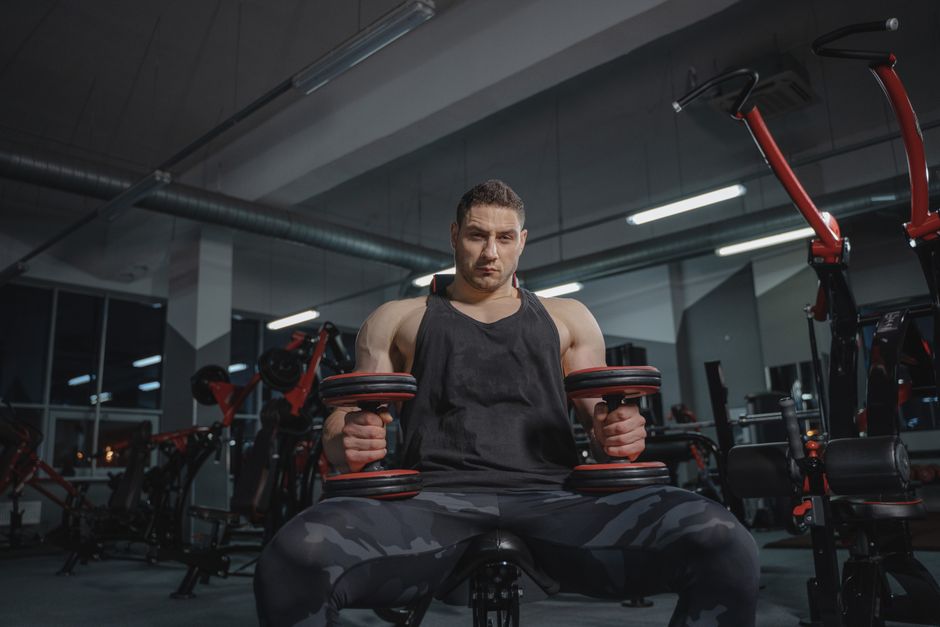
My strongest recommendation is to stop chasing exhaustion. A beginner who finishes every workout unable to climb stairs may feel productive, but exhaustion does not prove that the program is working. Strength training needs repeatable performance, and repeatable performance needs recovery.
- Changing exercises every week: Keep the main lifts for at least six weeks so your technique can improve and your numbers can mean something.
- Adding weight after a bad set: A shaky repetition is a warning, not a personal challenge. Reduce the load and rebuild the movement.
- Skipping warm-up sets: Use two or three lighter sets before your first demanding lift, especially after sitting or driving.
- Copying an advanced lifter: A five-day bodybuilding split or high-volume powerlifting plan can exceed a beginner’s recovery capacity.
- Ignoring pain signals: Muscle effort and mild fatigue are normal. Sharp pain, joint swelling, numbness, or pain that changes your movement deserves a stop and, when needed, clinical assessment.
- Measuring only body weight: Track repetitions, load, waist measurement, sleep, and how stable your technique feels. Scale weight alone cannot show strength progress.
Do not buy a lifting belt, pre-workout powder, or expensive recovery gadget to solve a consistency problem. Those tools may have a place later, but they cannot replace three weekly sessions, adequate protein, and seven to nine hours of sleep for most adults.
People with a recent surgery, uncontrolled blood pressure, a significant injury, or symptoms such as chest pain should get medical guidance before starting resistance training. A trainer can also help with technique, but the trainer should teach you how to progress rather than keep you dependent on constant supervision.
Verdict: The biggest beginner upgrade is a calmer program with fewer exercises, safer effort, and six weeks of consistent records.
The 12-Week Rule for Knowing If It Works
Give a sensible program 12 weeks before judging it, unless pain or a clear safety problem forces an earlier change. During the first four weeks, expect better coordination and faster learning. Weeks five through eight often bring visible improvements in repetitions and control. By weeks nine through 12, many beginners can handle more load, but the exact number varies with sleep, age, training history, and nutrition.
What progress should you expect?
Look for a small upward trend, not a perfect weekly climb. You might add 10 pounds to a goblet squat, move from knee push-ups to floor push-ups, or increase a dumbbell row from 20 to 30 pounds while keeping the same range of motion. Those are useful outcomes even if the scale does not change.
When should you change the plan?
Change an exercise when pain, equipment limits, or a long stall makes the current version unworkable. Do not change it because one workout felt poor. First check sleep, food, rest days, and whether you increased too many variables at once. If every major lift has stalled for three weeks despite good recovery, reduce the load for one week, then rebuild with smaller jumps.
The best beginner strength plan in 2026 is still the one you can repeat next week. Progressive overload gives that repetition a direction: record the work, improve one measurable detail, and protect the technique that lets you train again. For most beginners, three full-body sessions and adjustable dumbbells are the clearest starting point because they keep cost, complexity, and recovery under control.
Verdict: Judge the process after 12 consistent weeks, not after one painful workout. The category is moving toward smarter tracking and more flexible home equipment, but disciplined progression remains the part that builds strength.
Medical Disclaimer: This content is for informational purposes only and does not constitute medical advice. Always consult a qualified healthcare professional before making health-related decisions.