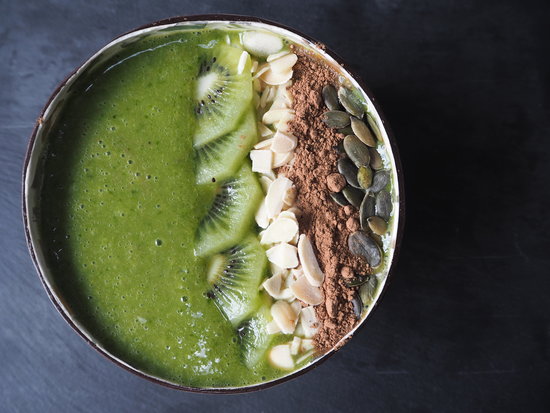
A colorful smoothie bowl can be a pleasure to make, photograph, and eat. But a beautiful surface does not tell you whether breakfast will be satisfying. A bowl made mostly from fruit and juice can taste refreshing while leaving you wanting something more soon afterward.
The most useful approach is to build the meal first and decorate it second. Combine fruit with a clear protein source, use enough liquid to blend smoothly, and finish with toppings that add texture. You can still create those neat rows of berries and seeds without turning breakfast into a complicated project.
Build a balanced base before choosing colors
Start with frozen fruit for sweetness, flavor, and a spoonable consistency. For one bowl, roughly one cup of frozen fruit is a practical starting point. Use one fruit or a combination, such as half a banana with berries or mango. Adjust the amount to your appetite and the other ingredients rather than treating the bowl as a fixed portion.
Next, choose a substantial protein ingredient. Plain Greek yogurt, cottage cheese, silken tofu, or a higher-protein soy yogurt can make the base creamy. Check the label on plant-based yogurts: coconut and almond versions may contain relatively little protein. Nut butter contributes fat, flavor, and some protein, but a small spoonful does not play the same role as a generous serving of yogurt or tofu.
Add a little milk, fortified soy drink, or water to help the blades move. Juice is optional, but it usually adds sweetness without making the bowl creamier. Rolled oats can add body and fiber, while nuts and seeds provide a contrasting crunch. You do not need every ingredient in every bowl.
Make it thick without overwhelming your blender
A good smoothie-bowl base holds a spoon trail briefly and supports toppings instead of letting them sink immediately. Frozen banana creates a creamy texture, but frozen mango, peaches, and berries also work. Freeze banana slices separately on a tray before transferring them to a container so they do not become one solid block.
- Follow your blender’s loading instructions. For many upright blenders, liquid goes in first, followed by yogurt or tofu, soft ingredients, and frozen fruit.
- Start with two to four tablespoons of liquid for one serving. Blend briefly, then add more a tablespoon at a time only if needed.
- Use a tamper only if it is designed for your blender. Otherwise, switch off and unplug the machine before scraping down the sides with a spatula.
- If the blades stall, let the fruit soften slightly or add a little liquid. Do not keep running a struggling motor.
Too thin? Blend in a few more frozen fruit pieces or a spoonful of oats, then give the oats a moment to absorb liquid. Too icy? More yogurt or tofu can soften the texture. Taste before adding honey or syrup; ripe fruit may provide all the sweetness you want.
Choose toppings for flavor, crunch, and satisfaction
Think in three small groups: fresh fruit, something crunchy, and an optional finishing touch. A few sliced strawberries, a tablespoon of chopped walnuts, and a sprinkle of cinnamon create plenty of interest. Granola works well too; start with a couple of tablespoons and add more if it suits your appetite.
Toppings are part of the meal, so consider what the base already contains. If you blended banana and mango, you might prefer seeds and oats on top rather than another large serving of fruit. If the base is tart and berry-heavy, sliced banana can balance the flavor. Ground flaxseed blends easily into yogurt, while whole chia seeds add a different texture as they absorb moisture.
Chocolate, coconut flakes, and nut butter can all fit. Use them because you enjoy the taste, without feeling that every bowl needs a drizzle. For allergies, choose suitable alternatives and check ingredient labels, especially on granola and mixed toppings.
Try three bowls with practical proportions
Each recipe below makes one bowl. The liquid amounts are starting points because fruit size, yogurt thickness, and blender strength vary. Increase the portions if you need a larger meal, or serve a smaller bowl alongside toast or another breakfast food.
Cinnamon apple bowl
Blend half a frozen banana, one-third cup of unsweetened applesauce, three-quarters cup of plain Greek yogurt, two tablespoons of rolled oats, and a pinch of cinnamon. Start with two tablespoons of milk, adding more only as needed. The applesauce adds moisture, so this bowl may need less liquid than a berry version.
Spoon into a bowl and finish with a few thin apple slices, a tablespoon of chopped walnuts, and a little granola. For a dairy-free version, use a higher-protein soy yogurt. If you enjoy a sharper flavor, add a small squeeze of lemon before blending.
Creamy green kiwi bowl
Blend half a frozen banana, half a cup of frozen mango, a small handful of washed baby spinach, three-quarters cup of plain Greek or higher-protein soy yogurt, and two tablespoons of milk or soy drink. Add a small piece of peeled ginger if you like its warmth.
Top with one sliced kiwi and a tablespoon of pumpkin seeds. Spinach offers a mild starting point; larger amounts of greens can make the flavor more pronounced. Matcha is optional and contains caffeine, so leave it out if you prefer a caffeine-free breakfast. This bowl does not need honey unless you taste it and want extra sweetness.
Two-tone berry and mango bowl
For a colorful bowl without specialty powders, blend three-quarters cup of plain Greek yogurt or silken tofu with half a frozen banana and just enough milk or soy drink to move the blades. Divide this mixture in half. Blend one half with half a cup of frozen berries and the other with half a cup of frozen mango.
Spoon the mixtures into opposite sides of a shallow bowl and gently swirl where they meet. Add a small cluster of fresh berries and a tablespoon of chopped nuts or seeds. Using two colors gives you a striking design with familiar ingredients, although a single mixed batch tastes just as good when time is short.
Style and photograph it while it is cold
Have your toppings ready before blending. Spoon the base into a shallow bowl, smooth the surface, and arrange two or three topping groups in a curve or across one side. Leave some of the base visible so the colors can stand out.
For a quick photograph, move near a window with soft natural light. Wipe the rim, use a simple background, and take an overhead shot to show the pattern. A slightly lower angle highlights thickness. Keep the photo session brief so you can enjoy the bowl before it melts.
Prepare ahead for easier mornings
Portion frozen fruit into containers and keep dry toppings ready separately. Add refrigerated ingredients when you blend. Wash fresh produce before preparing it, use clean equipment, and follow package instructions for frozen ingredients.
Freshly blended bowls have the best texture. If you have leftovers, refrigerate them promptly in a covered container and use them the next day; expect some separation and stir before eating. Store crunchy toppings separately. The goal is a breakfast you enjoy and can repeat, with the photograph as a pleasant extra.