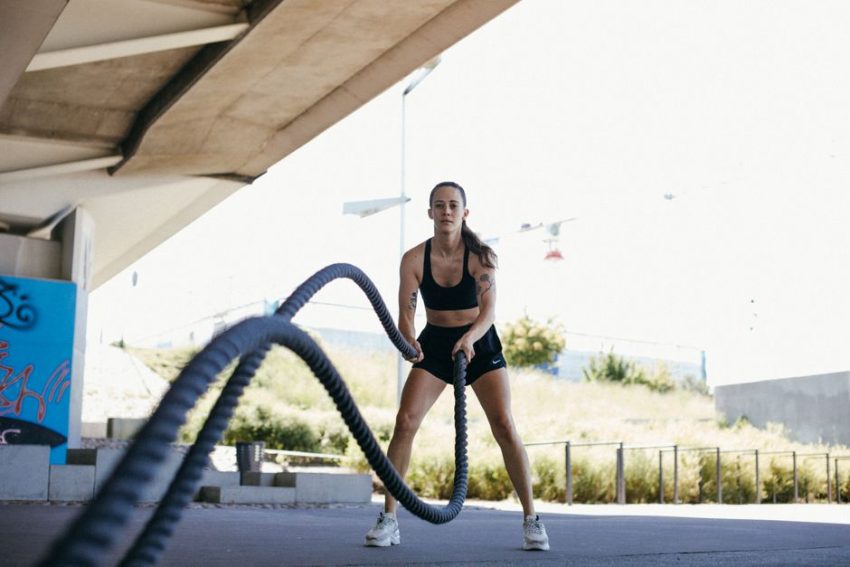
You’ve been doing HIIT for months. Your heart rate spikes, you sweat through your shirt, and you feel like you’re dying. But your VO2 max number on your Garmin hasn’t budged. Why?
Because most “HIIT” workouts people do are metabolic conditioning — not targeted VO2 max training. They improve work capacity and burn calories, but they don’t push your cardiovascular ceiling. Raising VO2 max requires hitting specific intensity zones for specific durations. Below are six protocols that do exactly that, ranked by data from exercise physiology studies.
Why Most HIIT Plans Fail to Move Your VO2 Max Needle
The problem is intensity drift. People start hard, fade to moderate, and call it interval training. But VO2 max adaptation requires 90–95% of your maximal heart rate or 100–105% of your power at VO2 max (pVO2). If you can talk during the work interval, you’re not training VO2 max.
Three specific failure modes kill results:
- Work intervals too long — anything over 5 minutes at max effort drops power output below threshold. You end up training lactate clearance, not oxygen uptake.
- Rest intervals too short — 30 seconds rest after a 4-minute interval means you start the next rep with elevated heart rate and reduced stroke volume. The stimulus collapses.
- Wrong modality — bodyweight burpees or kettlebell swings can’t sustain the power output needed. Running, cycling, rowing, or ski erg are better choices because you can measure and repeat exact loads.
One study in the Journal of Applied Physiology found that subjects who trained at 90–95% HRmax for 4-minute intervals increased VO2 max by 8.5% in 8 weeks. Subjects doing “whatever feels hard” saw 1.2% change. The difference was intensity control, not effort.
The Norwegian 4×4 Protocol: The Gold Standard
This is the most researched VO2 max protocol in existence. Developed at the Norwegian University of Science and Technology, it’s used by Olympic cross-country skiers and Tour de France cyclists. The data is consistent: 4-minute intervals at 90–95% HRmax, with 3 minutes of active recovery at 60–70% HRmax. Repeat four times.
Why it works. Four minutes is the sweet spot. Long enough to drive cardiac output to ceiling. Short enough that you can sustain the power output. The 3-minute recovery allows heart rate to drop to about 120 bpm before the next interval, which resets the stroke volume for maximum response.
How to Execute This Correctly
On a treadmill or stationary bike with heart rate display:
- Warm up 10 minutes at easy pace (60% HRmax).
- Interval 1: Run or cycle at pace that brings HR to 90–95% max within 90 seconds. Hold for 4 minutes.
- Recover 3 minutes at very easy pace (walk or spin lightly).
- Repeat intervals 2, 3, and 4 at same intensity.
- Cool down 5 minutes.
Total session time: 38 minutes. That’s it. No more. Adding extra intervals or extending work time reduces quality. If you cannot hold the same power output on interval 4 as interval 1, the rest period is too short or the intensity is too high.
Tabata Protocol: 20/10 at Maximal Effort — But Only for the Right Athlete
Izumi Tabata’s original 1996 study used 20 seconds of maximal cycling at 170% VO2 max, followed by 10 seconds rest, repeated 8 times. Total: 4 minutes. The subjects were already elite speed skaters. Their VO2 max increased by 14% in 6 weeks.
The catch. Most people cannot sustain 170% of their VO2 max power output for even one 20-second interval. They hit 130%, drop to 110% by rep 4, and the stimulus disappears. The Tabata protocol only works if you can produce near-maximal power for the full 4 minutes. If your power drops more than 15% across the 8 reps, you’re not doing Tabata. You’re doing a generic circuit.
Who should use it: Competitive cyclists, rowers, and sprinters with at least 2 years of structured training. For everyone else, the 4×4 protocol produces better results with lower injury risk.
The Modified Tabata for Non-Elites
If you want the Tabata structure but lack the power output, use a bike ergometer with power measurement. Set resistance so your target wattage equals 120–130% of your FTP (functional threshold power). Do 30 seconds work, 30 seconds rest, 7 rounds. This is not Tabata — it’s a different stimulus — but it’s more sustainable and still drives VO2 max gains for intermediate athletes.
Long Intervals at Lactate Threshold: The Forgotten Method

Short intervals get all the attention, but longer intervals at lactate threshold (85–90% HRmax) also raise VO2 max by improving the body’s ability to clear lactate and sustain high cardiac output. The key difference: these intervals last 8–12 minutes, with work-to-rest ratios of 3:1 or 4:1.
Why this works. At 85–90% HRmax, your stroke volume plateaus near maximum. Holding that for 10 minutes forces the left ventricle to adapt structurally over weeks. Studies show this increases VO2 max by 6–10% over 10 weeks in moderately trained individuals.
| Protocol | Work Duration | Rest Duration | % HRmax | Best For |
|---|---|---|---|---|
| Norwegian 4×4 | 4 min | 3 min | 90–95% | Runners, cyclists, rowers |
| Tabata (classic) | 20 sec | 10 sec | 170% pVO2 | Elite athletes only |
| Modified Tabata | 30 sec | 30 sec | 120–130% FTP | Intermediate cyclists |
| Lactate threshold intervals | 8–12 min | 2–4 min | 85–90% | Building endurance base |
| Little method (1:1) | 1 min | 1 min | 95–100% | Time-crunched athletes |
The Little Method: 1-Minute Intervals for Time-Crunched Athletes
Jonathan Little’s 2011 study showed that 1-minute intervals at 95–100% HRmax with 1-minute recovery, repeated 10 times, improved VO2 max by 12% in 6 weeks. Total work time: 10 minutes. Total session time including warm-up: 25 minutes.
Why it’s practical. You can do this on a treadmill, stationary bike, or outdoor run. The 1-minute effort is short enough that you can push near-maximal intensity without your form breaking down. The 1-minute recovery is just enough to let heart rate drop to 130 bpm before the next rep.
The danger zone. People try to do 15 or 20 reps because “it’s only a minute.” Don’t. The study used exactly 10 reps. Beyond that, power output drops and the stimulus shifts from VO2 max to muscular endurance. If you want more volume, do the 4×4 protocol instead.
How to Gauge Intensity Without a Heart Rate Monitor
Use the talk test. During the work interval, you should be able to say 3–4 words before needing to breathe. If you can speak a full sentence, push harder. If you can’t say a single word, back off slightly — you risk blowing up before rep 6.
Pyramid Intervals on the Rower: Full-Body VO2 Max Stimulus
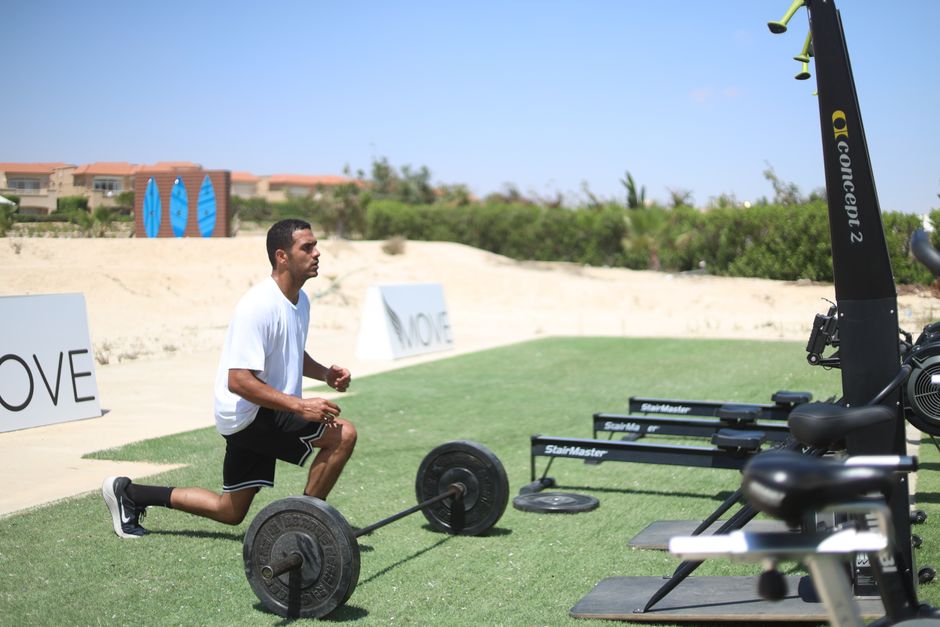
Rowing engages more muscle mass than running or cycling. That means higher oxygen demand per unit of effort. A well-structured pyramid interval on the Concept2 RowErg can push VO2 max higher than running intervals for the same perceived effort.
The protocol: 1 minute work, 1 minute rest → 2 minutes work, 1 minute rest → 3 minutes work, 2 minutes rest → 2 minutes work, 1 minute rest → 1 minute work, 1 minute rest. Total work: 9 minutes. Total session: 18 minutes of intervals plus warm-up.
Why it works. The pyramid structure lets you build into the hardest interval (3 minutes) with progressive activation. The 2-minute rest before the 3-minute effort ensures you can sustain the necessary power. The descending side prevents early fatigue from ruining the later intervals.
Key metric: Aim for 500m split times that stay within 3 seconds per 500m across all intervals. If your split time drops more than 5 seconds on the 3-minute interval, your rest periods need to be longer or your pace needs to be more conservative.
Cycling VO2 Max Intervals: The 3-Minute Repeatable Effort
Cyclists have a specific advantage: power meters. You can set exact wattage targets and measure compliance. The most effective cycling-specific VO2 max protocol is 3-minute intervals at 105–110% of functional threshold power (FTP), with 3 minutes of easy spinning between efforts. Repeat 5 times.
Why 3 minutes? At 105–110% FTP, most cyclists can sustain that power for exactly 3 minutes before blood lactate spikes and power drops. Longer intervals force you below threshold. Shorter intervals don’t tax the oxygen transport system enough.
Setup on a Wahoo KICKR or Tacx Neo: Use ERG mode and set the target wattage to 105% of your most recent FTP test. The smart trainer will hold that power regardless of your cadence. This removes the pacing variable and lets you focus on breathing and form.
When NOT to use this protocol: If your FTP is below 2.5 watts per kilogram for men or 2.0 for women, spend 8 weeks building aerobic base with longer, lower-intensity rides before attempting these intervals. Jumping into VO2 max work with low aerobic fitness increases injury risk and produces minimal gains.
Where to Go From Here
Pick one protocol. Do it exactly as written for 6 weeks. Retest your VO2 max using the same method (Cooper test, 20-minute TT, or lab test). If you see less than 5% improvement, the most likely culprits are inconsistent intensity or inadequate recovery between sessions. VO2 max training requires 48–72 hours between hard sessions. Two interval sessions per week is enough. Three is too many for most athletes. The ceiling isn’t effort — it’s recovery.
Medical Disclaimer: This content is for informational purposes only and does not constitute medical advice. Always consult a qualified healthcare professional before making health-related decisions.