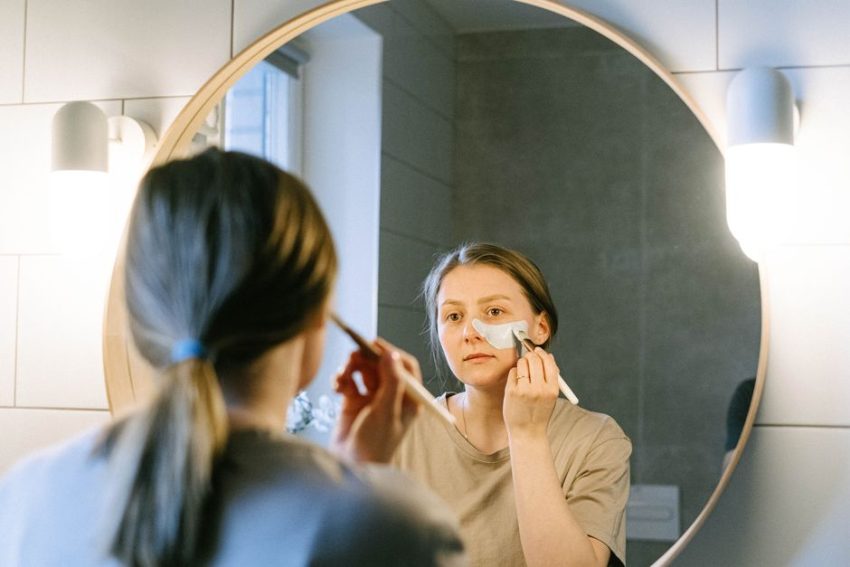
Your cheeks feel tight after a windy commute, but your forehead is shiny by lunchtime. That awkward mix is the usual sign that your winter routine is now too heavy for spring. The fix is not a complete bathroom-cabinet reset. Change one layer at a time, keep your cleanser gentle, and make daily sun protection the non-negotiable step.
How to switch your routine in seven days
Days 1 and 2: check what your skin is doing
Before buying anything, write down three observations: how your skin feels after cleansing, where it becomes oily, and whether any product stings. Do this in the morning and evening for two days. Spring weather can swing from cold and dry to warm and humid, so one uncomfortable afternoon does not prove that a product has stopped working.
- Keep your current cleanser and treatment unchanged on day one.
- Reduce a thick night cream to a thin layer on the forehead, nose, and chin. Keep the full amount on dry cheeks if they still feel tight.
- On day three, replace only the heavy daytime cream with a lighter lotion or gel-cream.
- On day four, apply broad-spectrum SPF 30 or higher every morning to the face, neck, ears, and exposed hands.
- On day five, check for stinging, new bumps, peeling, or unusual redness. If any appear, return to the last comfortable step.
- On day six, decide if your morning cleanser is still needed. Dry or sensitive skin often does better with a water rinse in the morning and cleanser at night.
- On day seven, keep the smallest routine that leaves your skin comfortable: cleanse, moisturize, and protect.
Do not change three products at once
A gradual switch gives you useful information. If you replace your cleanser, moisturizer, exfoliant, and sunscreen on the same day, you cannot tell which product caused irritation. A seven-day test also prevents a common wasteful habit: throwing out a product that still works on the dry parts of your face.
What should change first? Your moisturizer, not your cleanser

Change the moisturizer first. Winter air, indoor heating, and hot showers can leave the outer skin layer short on water and lipids, so a thick cream may have been useful for months; when spring humidity rises, that same cream can feel greasy, trap sweat, or make clogged pores more obvious, but the answer is not a harsh foaming wash because stripping the skin can lead to tightness and rebound oiliness. Keep a mild cleanser in place while you test a lighter moisturizer, since cleansing removes surface dirt and sunscreen while moisturizing helps slow water loss; changing both together removes your baseline and makes the routine harder to read. For dry cheeks, continue using a cream only where you need it, while combination or oily areas may need a lotion or gel; for sensitive skin, fragrance-free formulas remain the safer starting point even when the weather feels warmer. This order also protects your budget: one moisturizer change costs less than rebuilding the whole routine, and it lets you judge the result after several ordinary days instead of reacting to one hot afternoon. If your skin is painful, cracked, persistently itchy, or develops a rash, stop experimenting and ask a dermatologist for help.
Why spring irritation happens even when the air feels mild
The barrier is still catching up
Skin does not reset when winter ends. Cold air, indoor heating, hot water, wind, and repeated cleansing can weaken the outer layer for weeks. That layer normally slows water loss and helps block irritants. When it becomes disrupted, products that felt fine in January may sting in April. A mild climate can also hide the problem because the air feels comfortable while pollen, wind, sweat, and stronger sun exposure add new stress.
More oil does not always mean better hydration
Oil and water play different roles. A rich balm can reduce water loss, but it does not automatically add enough water to dry skin. A lightweight moisturizer can feel comfortable while still supporting hydration when it contains ingredients such as glycerin, hyaluronic acid, or ceramides. If you respond to spring shine by washing harder, scrubbing flakes, or adding several acids, you may damage the barrier further. The result can be a face that feels both greasy and tight.
Sun exposure changes the risk calculation
Longer daylight makes sunscreen easier to miss because the temperature may still feel cool. Ultraviolet exposure does not depend on whether you feel hot. Use broad-spectrum SPF 30 or higher on exposed skin, seek shade when practical, and add a hat or sunglasses for long outdoor periods. Introduce exfoliating acids or retinoids only after cleansing, moisturizing, and sun protection feel stable. If a treatment burns, causes swelling, or produces ongoing peeling, pause it instead of pushing through.
My clear spring starter kit: keep it to three products
My recommendation is a three-product core routine: a gentle cleanser, a light moisturizer, and a separate sunscreen. This setup wins because it solves the three spring problems that affect most people: sweat and sunscreen buildup, uneven hydration, and greater ultraviolet exposure. It also gives you a clean baseline before you add a treatment.
Best low-fuss combination
Use CeraVe Hydrating Facial Cleanser at night if your skin feels dry or normal. At $15.99, it gives you a simple cleanser with ceramides and hyaluronic acid without forcing you into a luxury price point. For the moisturizer, choose La Roche-Posay Toleriane Double Repair Face Moisturizer at $24.99 if your skin still feels dry or reactive. Apply a pea-sized amount to slightly damp skin, then adjust the amount by area rather than covering every part of your face with the same thick layer.
Best sunscreen choice for comfortable daily wear
For normal to dry skin, Beauty of Joseon Relief Sun Rice + Niacinamide SPF50+ PA++++ costs $29 at list price for 50 mL and has a creamy texture that works well under makeup for many users. Choose the La Roche-Posay Toleriane Double Repair Facial Moisturizer with SPF 30 at $25.99 if you prefer one daytime moisturizing step for ordinary short outings. Do not buy a sunscreen merely because it feels light: choose broad-spectrum protection, use enough, and select a water-resistant formula for exercise, pool time, or extended outdoor work.
Do not buy a new retinoid just because spring feels like a fresh start. The Ordinary Granactive Retinoid 2% Emulsion costs $12.10, but an affordable active can still irritate a fragile barrier. Add it only after the core routine feels calm, and never start it on the same week as a new exfoliating acid.
Spring skincare mistakes: five questions answered
Should I exfoliate away winter flakes?
No. Flaking often signals dryness or irritation, not dirt that needs scrubbing. Moisturize first for at least a week. If the flakes remain and your skin feels calm, add one gentle exfoliation session rather than using a scrub every day.
Can I stop moisturizing because my face is oily?
No. Oily skin can still lose water. Use a smaller amount or a lighter, non-comedogenic formula, especially on the center of the face. A harsh cleanser is a poor substitute for a suitable moisturizer because it can leave skin tight and irritated.
Do I need a different sunscreen in spring?
Not automatically. The important checks are broad-spectrum coverage, SPF 30 or higher, comfortable application, and enough product. Change the formula only if the winter sunscreen feels too heavy, pills under makeup, or makes you skip the morning step.
When should I stop testing a product?
Stop if you develop swelling, hives, intense burning, blistering, or a rash. Mild adjustment is not a requirement for effective skincare. Persistent or painful symptoms deserve medical advice.
How to test and adjust your spring routine
Use a small-area test
Apply a new leave-on product to a small area near the jaw or behind the ear once daily for several days. This cannot guarantee that your whole face will tolerate it, but it can expose obvious irritation before you spread the product everywhere. Keep the rest of your routine unchanged during the test.
Change one variable every seven to fourteen days
Give a cleanser or moisturizer enough time to show whether it improves comfort, oiliness, or tightness. Add only one treatment after the core routine feels steady. Record the product name, start date, amount used, and any reaction. That simple note prevents you from blaming the newest product for a problem caused by sun exposure, pollen, stress, or over-cleansing.
A good spring routine should feel almost boring: clean skin, comfortable hydration, and reliable sun protection. As the weather keeps shifting, the most useful habit is not chasing every seasonal launch but learning which small adjustments keep your skin steady.
Always consult a qualified healthcare professional before making health-related decisions.