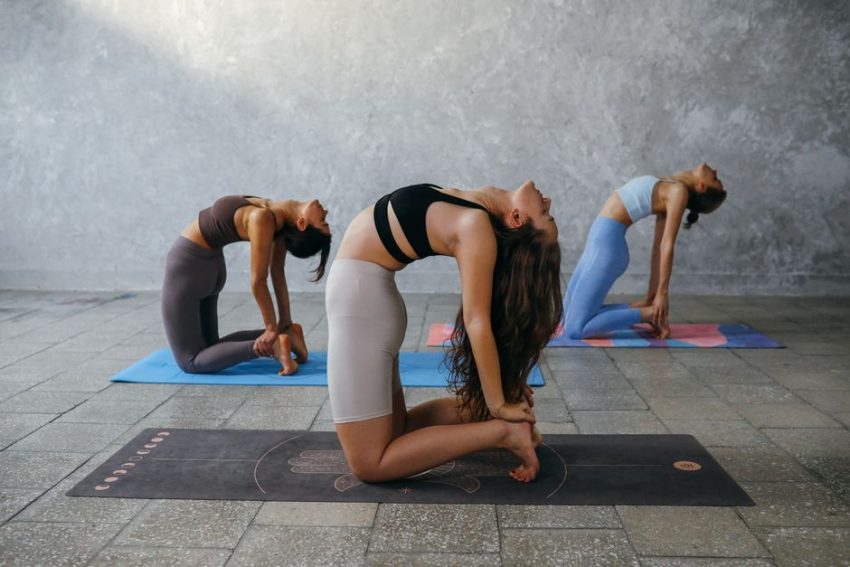
Most yoga advice for back pain is wrong. Not because yoga doesn’t work — it does. But because the poses people recommend are often too aggressive for someone who’s already hurting. Touching your toes, deep forward folds, and intense twists can make a tight, inflamed lower back worse. The fix isn’t more stretching. It’s gentler movement that calms the nervous system and releases tension without forcing range of motion your body doesn’t have yet.
This guide covers 7 poses that work for people who are stiff, in pain, and not flexible at all. No yoga experience needed. You’ll need a mat or carpeted floor, a folded towel, and about 15 minutes.
The Problem With Most Back Pain Yoga Advice
Search “yoga for back pain” and you’ll see photos of people folded in half, forehead touching knees. That’s aspirational, not therapeutic. When your lower back is already irritated, aggressive stretching triggers a protective response. Your muscles tighten up more. Some poses — like seated forward folds, deep spinal twists, and anything requiring you to round your spine under load — put direct pressure on lumbar discs that may already be stressed.
Here’s what actually matters for lower back pain relief:
- Gentle movement increases blood flow to stiff muscles without triggering guarding
- Breathing slowly (especially long exhales) activates the parasympathetic nervous system, which reduces muscle tension
- Holding poses for 30-60 seconds gives fascia and muscles time to release — bouncing or rushing doesn’t work
- Consistency beats intensity. Ten minutes daily outperforms one long weekly session
A 2026 study in the Annals of Internal Medicine found that yoga was as effective as physical therapy for chronic low back pain — but the protocols used were gentle, modified poses, not advanced flows. That’s the key distinction.
7 Gentle Yoga Poses for Lower Back Pain Relief

Do these in order. Hold each pose for 5-8 slow breaths (roughly 30-60 seconds) unless noted otherwise. Stop if anything causes sharp pain — dull stretching is fine, sharp is not.
1. Pelvic Tilts
Lie on your back with knees bent, feet flat on the floor, hip-width apart. Place your hands on your hip bones. Slowly tilt your pelvis toward your face, flattening your lower back into the floor. Hold for 3 seconds. Release. Repeat 10 times.
This looks like nothing. It’s not. Pelvic tilts teach you to control the deep core muscles (transverse abdominis) that stabilize your lumbar spine. Weakness here is a major contributor to chronic back pain. You’re also gently mobilizing the sacroiliac joints without any load. If you only do one pose from this list, do this one.
2. Knee-to-Chest (Single Leg)
Stay on your back. Pull your right knee toward your chest, keeping your left leg bent with foot on the floor or extended straight. Hold behind your thigh, not your shin — pulling on the shin puts pressure on the knee joint. Breathe into your lower back. Switch sides.
This pose releases the psoas and lower erector spinae muscles. The psoas attaches to your lumbar vertebrae and gets chronically tight from sitting. A tight psoas pulls your lower back into extension, which is exactly the position that hurts for most people.
3. Reclined Pigeon Pose (Figure Four)
Lie on your back, knees bent. Cross your right ankle over your left knee. Thread your hands behind your left thigh and pull your left leg toward you. You’ll feel the stretch in your right glute and hip. Hold, then switch.
Glute tightness is underrated as a back pain cause. Your glutes are supposed to do heavy lifting when you stand, walk, and bend. When they’re tight and weak, your lower back compensates. This pose targets the piriformis and glute medius without requiring the hip flexibility that the seated pigeon pose demands.
4. Cat-Cow (Modified)
Start on hands and knees. As you inhale, drop your belly slightly and lift your chest — but don’t crank your neck up. As you exhale, round your spine toward the ceiling like an angry cat. Move slowly, matching breath to movement. Do 8-10 rounds.
Important modification: keep the range small at first. You don’t need a dramatic arch or deep round. Gentle spinal flexion and extension lubricates the facet joints and improves mobility without compressing discs. Deep, forced rounding can aggravate disc issues.
5. Child’s Pose (Supported)
From hands and knees, sit your hips back toward your heels and reach your arms forward. Here’s the modification that matters: place a folded blanket or pillow between your hips and heels, and rest your forehead on a block or stacked fists. You want support, not a deep stretch.
Child’s pose gently lengthens the lumbar spine and releases tension in the back muscles. But for people with tight hips or knee issues, the full version puts pressure on knees and doesn’t allow the back to relax. Supporting yourself removes that tension and lets your body actually let go.
6. Sphinx Pose
Lie on your stomach. Prop yourself up on your forearms, elbows under shoulders. Keep your glutes relaxed and let your lower back soften. Look slightly down, not up. Hold for 5-8 breaths.
This is a gentle backbend that strengthens the spinal erectors without the compression of upward-facing dog or cobra. It’s particularly helpful for people who sit all day and develop a flat or flexed lower back posture. The key is not pushing up high — just enough to feel a mild stretch in the front of your hips and a gentle engagement in your back.
7. Supine Spinal Twist (Modified)
Lie on your back, knees bent. Let both knees fall to the right, keeping your left shoulder on the floor. Place a pillow or folded blanket under your knees if they don’t reach the floor. Hold, then switch sides.
Twists release tension in the obliques and quadratus lumborum — the muscle that runs along your lower back and is often a hidden source of pain. But forcing a deep twist when you’re stiff can strain the spine. The supported version gives you the release without the risk.
When Yoga Makes Back Pain Worse
Yoga isn’t always the answer. Here’s when to skip it and call a doctor or physical therapist instead:
- Pain below the knee — numbness, tingling, or shooting pain down your leg suggests nerve involvement (sciatica or disc issue)
- Pain that doesn’t change with position — if it hurts the same lying down, sitting, and standing, get checked
- Loss of bowel or bladder control — this is an emergency, go to urgent care immediately
- Fever with back pain — could indicate infection
- Pain after a fall or accident — rule out fracture first
Also, avoid these poses entirely if you have lower back pain:
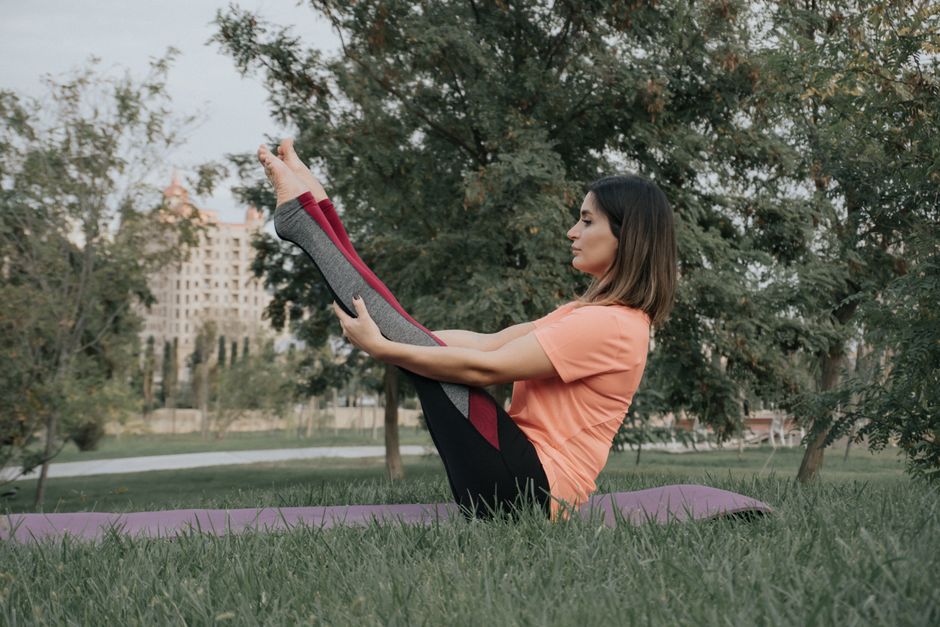
Seated forward folds — rounding the spine under gravity compresses lumbar discs. Deep spinal twists (like revolved triangle) — too much rotational force on a stiff spine. Plow pose and shoulder stand — extreme neck and spine flexion. Boat pose — if your core is weak, your lower back takes the load. Standing forward folds — same disc compression issue as seated versions.
You don’t need to prove anything. The goal is pain relief, not flexibility bragging rights.
How to Build a Daily 10-Minute Routine
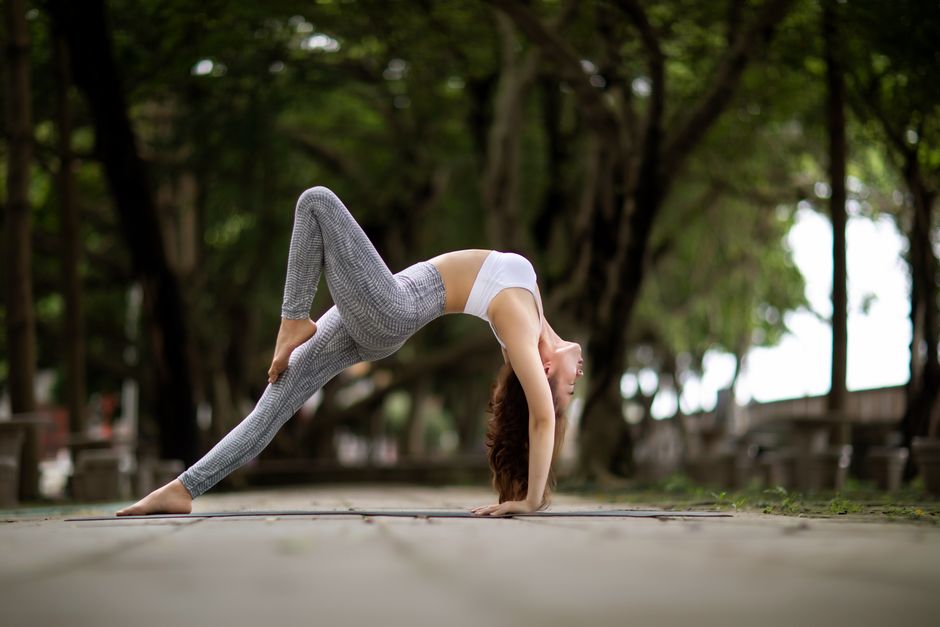
Here’s a simple structure that works. Do this every morning or evening.
| Time | Pose | Duration | Notes |
|---|---|---|---|
| 0:00-1:00 | Pelvic Tilts | 10 reps | Warm up the spine, engage core |
| 1:00-3:00 | Knee-to-Chest | 30 sec per side | Release psoas and lower back |
| 3:00-5:00 | Reclined Pigeon | 30 sec per side | Target glutes and hips |
| 5:00-7:00 | Cat-Cow | 8 rounds | Mobilize entire spine gently |
| 7:00-8:30 | Child’s Pose (Supported) | 60 sec | Full back release |
| 8:30-10:00 | Sphinx Pose | 60 sec | Gentle backbend, hip flexor stretch |
| 10:00-11:30 | Supine Twist | 45 sec per side | Release QL and obliques |
If you’re short on time, cut Sphinx and Supine Twist. Keep Pelvic Tilts, Knee-to-Chest, and Child’s Pose as your non-negotiables.
One more thing: pair this with walking. A 15-20 minute walk before or after your yoga session increases blood flow to the lower back and helps the muscles stay loose. Walking is the single most underrated back pain treatment that exists.
Why This Works Better Than Stretching Harder
Here’s the thing nobody tells you about back pain: the muscle tightness you feel is often a protective response, not the root problem. Your body tightens muscles around an unstable or irritated area to prevent further injury. Stretching those muscles aggressively is like yelling at a security guard for doing his job. It doesn’t help.
Gentle yoga works because it:
- Signals to your nervous system that movement is safe
- Builds core stability through poses like pelvic tilts and sphinx
- Releases tension in supporting muscles (hips, glutes, hamstrings) that pull on your lower back
- Improves blood flow to disc and joint tissues that have poor circulation
- Reduces stress hormones that contribute to muscle tension
A 2017 study in JAMA Internal Medicine reviewed multiple trials and found that yoga produced meaningful improvements in back pain and function compared to usual care. The protocols used were almost identical to what’s described here — gentle, modified, breath-focused poses. Not power yoga. Not hot yoga. Gentle.
The people who get results aren’t the ones who stretch the hardest. They’re the ones who show up daily, move slowly, and let their body release tension on its own schedule.
Stop forcing your back into positions it’s not ready for. Start with these seven poses, do them daily for two weeks, and see what changes.
Medical Disclaimer: This content is for informational purposes only and does not constitute medical advice. Always consult a qualified healthcare professional before making health-related decisions.