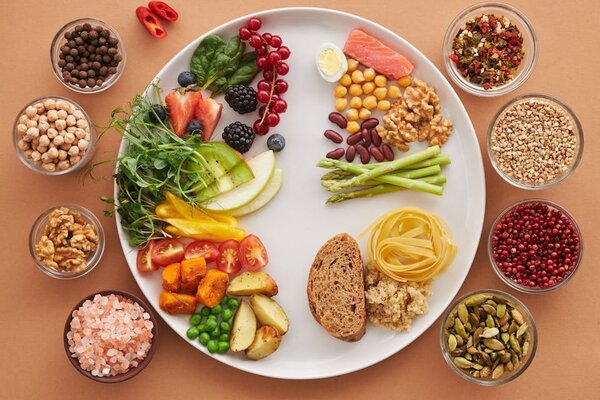
Choosing foods for healthy eating does not require a cupboard full of specialist products. It helps to have everyday ingredients that you enjoy, can afford, and know how to prepare. Vegetables, fruit, grains, beans, eggs, fish, dairy or suitable alternatives, and unsaturated fats can all contribute to varied meals. The aim is a workable pattern of eating, with room for convenience and pleasure.
Start with the meals you already make. Adding vegetables to pasta, choosing wholegrain toast more often, or keeping beans ready for a quick lunch can be more useful than replacing everything at once. Look for foods that make your next meal easier to assemble.
Use a balanced plate as a starting point
For a main meal, try filling roughly half your plate with vegetables, then sharing the remaining space between a protein food and a starchy food. This is a flexible visual guide, not a rule you must measure. Appetite, activity, preferences, and individual needs affect how much food feels right.
A balanced meal might be rice with tofu and stir-fried vegetables, potatoes with fish and peas, or a bean stew with bread and salad. Mixed dishes count too: you can add lentils and carrots to a pasta sauce without arranging separate sections on your plate. Include some fat for flavor and satisfaction, such as olive oil, seeds, or a yogurt dressing.
Choose vegetables and fruit you will actually eat
Variety is useful, but you do not need a different fruit or vegetable at every meal. Buy a manageable selection and plan where it will go. Carrots can become sticks for lunch, grated additions to sandwiches, or roasted vegetables for dinner. Apples, oranges, and other easy-to-store fruit can be practical snacks.
Fresh, frozen, and canned produce can all fit. Frozen broccoli or berries are handy when fresh food would spoil before you use it. Choose canned fruit in juice or water when available, and compare canned vegetables for salt. Seasonal produce may suit your budget and taste, but fresh produce is not automatically the best choice for every situation.
Keep satisfying starches on the shopping list
Bread, oats, rice, pasta, and potatoes provide a useful base for meals. Choose wholegrain options regularly for their fiber, while keeping the versions you enjoy and can prepare. Try wholemeal bread, oats at breakfast, brown rice in a grain bowl, or a mixture of wholewheat and regular pasta if you prefer a gradual change.
Labels such as multigrain or a brown color do not necessarily mean a product is wholegrain. Check the ingredient list for whole wheat, whole oats, or another whole grain. Potatoes with their skins can also add variety. Pair starches with protein and vegetables to make a fuller meal rather than treating carbohydrates as something to avoid.
Rotate a few convenient protein foods
Build your shopping around several options rather than relying on one food. Beans, lentils, chickpeas, tofu, eggs, fish, poultry, yogurt, and other dairy foods offer different tastes and textures. Plant proteins can be the center of a meal: lentil soup, chickpea curry, and a bean-filled wrap are straightforward examples.
- For the cupboard: keep canned beans, lentils, or fish for meals when you have little time.
- For the refrigerator: choose eggs, plain yogurt, tofu, or other foods you expect to use soon.
- For the freezer: portion fish, poultry, or cooked beans so you can take out what you need.
If you use plant-based milk alternatives, compare products for protein and added nutrients such as calcium, since they differ. Choose according to how the food fits your overall meals, dietary needs, and preferences.
Make room for unsaturated fats
Olive or rapeseed oil, nuts, seeds, avocado, and oily fish are useful choices for adding unsaturated fats. You do not need all of them. A bottle of oil for cooking and dressing vegetables, plus nuts or seeds you enjoy, can be a practical start.
Try a spoonful of nut butter on toast, seeds stirred into porridge, or a little oil in a bean salad. Nuts and seeds also bring texture and flavor. Choose forms that suit your household, taking allergies and choking risks for young children into account. Fats are part of a balanced meal; there is no need to remove them altogether.
Read labels to answer a few useful questions
Labels work best as a comparison tool, not a test that every food must pass. Start with similar products: compare bread with bread or yogurt with yogurt. Use the same reference amount on each label, because the suggested serving sizes may differ.
- Check fiber: compare it when choosing breads, cereals, and other grain products.
- Look at salt or sodium: this can help when comparing soups, sauces, and ready meals.
- Consider sugars: check added sugars where listed, and remember that total sugars may include those naturally present in milk or fruit.
- Check ingredients and allergens: use this information for your needs, rather than judging a food by the length of its ingredient list.
A short ingredient list does not guarantee a balanced food, and unfamiliar ingredient names do not automatically make something unsuitable. Frozen meals, canned foods, and packaged bread can be useful. A convenient dish may simply need extra vegetables or a protein food alongside it.
Choose drinks that support your routine
Water is a practical everyday drink. Keep it accessible at meals and during the day, and drink more when heat or activity increases your needs. There is no single amount that suits everyone. If you have been given a fluid restriction or other individual advice, follow that guidance.
Unsweetened tea and other unsweetened drinks can add variety. If sugary drinks are a daily habit, try replacing some with water, sparkling water, or an unsweetened option you enjoy. Whole fruit is often a more filling choice than juice. Changes can be gradual; an occasional sweet drink does not define your whole diet.
Turn your shopping into simple meals
Before shopping, check what you already have and choose a few meals with overlapping ingredients. Buy enough fresh food for your realistic cooking schedule, then use freezer and cupboard staples to fill gaps. A short list helps prevent buying aspirational ingredients that never become dinner.
- Breakfast: oats with plain yogurt, frozen berries, and seeds.
- Lunch: wholemeal toast with mashed beans, tomato, and a little olive oil.
- Dinner: rice with frozen vegetables and tofu, egg, or chicken.
- A quick backup: canned lentils warmed with tomatoes, served with bread and vegetables.
Adjust portions to your appetite and add more food when you need it. Keep treats you enjoy within your eating pattern without attaching guilt to them. The most useful products are the ones that help you make varied, satisfying meals repeatedly. Choose one manageable improvement this week, see whether it fits your life, and build from there.