
Most people think joint pain relief bandages are just a placebo — a colorful strip of tape that does nothing but lighten your wallet. That’s partly true. But the right bandage, applied correctly, can actually shut down pain signals before they reach your brain. The trick is knowing which type to use, how to put it on, and when it’s a complete waste of time.
The Real Reason People Use Joint Pain Relief Bandages
It’s Not Just About Physical Support
A bandage doesn’t have to hold a joint in place to relieve pain. In fact, most joint pain relief bandages — especially kinesiology tape — provide zero mechanical support. The fabric is too stretchy to immobilize anything. So why do people swear by it?
Because your skin is a massive sensory organ. When you tape or wrap a painful joint, you’re flooding the area with new tactile sensations. Your brain gets distracted by the gentle tug of the tape and turns down the volume on deeper, nagging pain signals. This is called the Gate Control Theory of Pain, first proposed by Ronald Melzack and Patrick Wall in 1965.
The Gate Control Theory of Pain
Your nervous system has a limited bandwidth. Light touch and pressure signals travel faster than dull, throbbing pain signals. By applying a bandage, you’re essentially cramming the neural gate with harmless information. The pain message gets stuck in the queue. It’s not voodoo — it’s neurophysiology.
This explains why a KT Tape Pro strip on a runner’s knee can be more effective than ibuprofen. The tape doesn’t repair the tendon; it mutes the brain’s perception of pain so you can move without wincing. But the effect fades if the tape’s tension is wrong or the skin can’t feel it.
Why Kinesiology Tape Feels Like It’s Working Even When It Isn’t
There’s a massive placebo component. A 2015 meta-analysis in the British Journal of Sports Medicine found that kinesiology tape’s pain-relief effect was small and often no better than sham taping when measured objectively. Yet subjective relief was high. People feel better because they expect to feel better. The ritual of applying tape creates confidence — and confidence alone can lower pain perception.
That isn’t a reason to trash your tape. It’s a reason to use it wisely. If it lets you exercise with less discomfort, the mechanism doesn’t matter as much as the outcome. But if you’re relying on tape to fix a torn meniscus, you’re setting yourself up for failure.
The Three Types of Pain Relief Bandages — Compared

| Type | Key Brand Example | How It Works | Best For | Duration | Cautions |
|---|---|---|---|---|---|
| Kinesiology Tape | KT Tape Pro, Kinesio Tex Gold, Mueller Kinesiology Tape | Lifts skin microscopically, improving circulation and stimulating touch receptors; activates gate control theory | Muscle and tendon pain during activity; postural cueing | 1–5 days (shower-safe) | Useless for joint instability; skin irritation possible; must be applied with correct stretch |
| Elastic Compression Wrap | ACE Brand Elastic Bandage (3- or 4-inch), McDavid Elastic Wrap | Provides gentle mechanical compression to limit swelling and add light support | Acute sprains, post-injury swelling, arthritic flare-ups | 2–6 hours at a time (rewrap if loose) | Never wrap too tight — risk of circulation cutoff; doesn’t truly stabilize a joint |
| Topical Analgesic Patch | Salonpas Pain Relief Patch (lidocaine 4%), Bengay Ultra Strength Patch | Delivers lidocaine or menthol through the skin to numb local nerve endings | Localized arthritic pain, back or shoulder knots, pre-activity numbing | Up to 12 hours | Avoid on broken skin; can cause chemical burns if worn too long; don’t combine with heating pads |
Each category works through a different mechanism. None of them is a cure. If your goal is to move more comfortably while your body heals, you’re in the right aisle. If you’re hunting for a permanent fix, skip the bandage aisle entirely.
How to Apply Them So They Actually Do Something
For Kinesiology Tape: Stretch the Tape, Not Your Skin
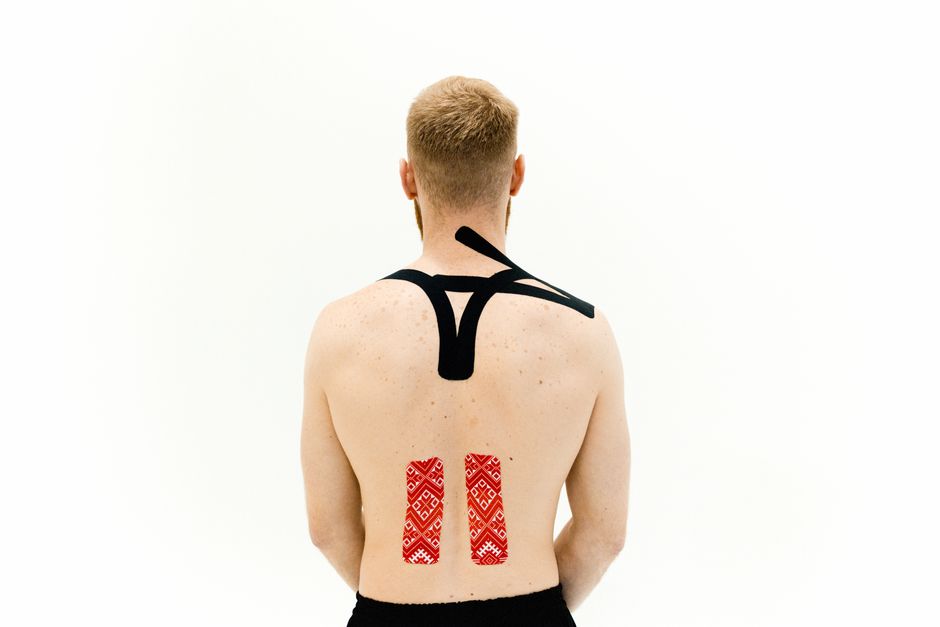
The single biggest mistake people make is pulling the tape tight while their skin is relaxed. You want the opposite. Position the joint in a stretched position first — bend your knee, flex your wrist — then apply the tape with very little stretch. When you return to neutral, the tape recoils slightly and lifts the skin. That lift is the whole game.
Use KT Tape Pro’s pre-cut strips or cut a longer strip from a roll. Round the corners with scissors. Rounded edges prevent peeling. Rub the tape vigorously after application to activate the heat-sensitive adhesive. Wait 30 minutes before sweating hard.
For Elastic Wraps: The Rule of Thumb Compression
Wrap from below the joint upward, not the other way. For an ankle sprain, start at the ball of the foot and move toward the calf. Overlap each layer by about half the width. The wrap should feel snug but not painful. A good test: you should be able to slide one finger under the bandage easily. If your toes turn cold or blue, you’ve gone too tight. Re-wrap immediately.
An ACE Bandage with hook-and-loop closures beats the ones with metal clips every time. Clips dig in and can fall off in your shoe. Replace the wrap when it loses elasticity — usually after 2–3 months of regular use.
For Topical Patches: Clean, Dry, and Wait
Wipe the skin with rubbing alcohol first. Oil, lotion, or sweat will block adhesion and reduce drug absorption. Press the patch firmly for 30 seconds. Don’t cut Salonpas patches — cutting can release too much medication at once. If you need a smaller dose, buy the smaller size.
Rotate application sites. Using the same spot repeatedly can cause skin breakdown or a chemical burn. Give the skin at least a day to recover between patches.
The 3 Most Common Application Mistakes
Mistake 1: Pulling Tape Too Tight
Overstretched kinesiology tape loses its skin-lifting effect and becomes an expensive sticker. It can even restrict movement and cause blisters. Tape should be applied with 25–50% stretch max.
Mistake 2: Wrapping Over Swollen Joints With No Compression Strategy
Many people wrap a swollen knee loosely and call it a day. That does nothing for swelling. If you’re using an elastic bandage, you need graduated compression — tightest at the farthest point from the heart, looser as you go up. A uniform wrap can actually trap fluid.
Mistake 3: Leaving a Patch On Too Long
Lidocaine patches like Salonpas are meant for 12 hours max. Wearing one for 24 hours increases the risk of skin irritation and doesn’t boost pain relief. If you’re still in significant pain after 12 hours, you need a different strategy — not more patch time.
When You Should Skip the Bandage Entirely
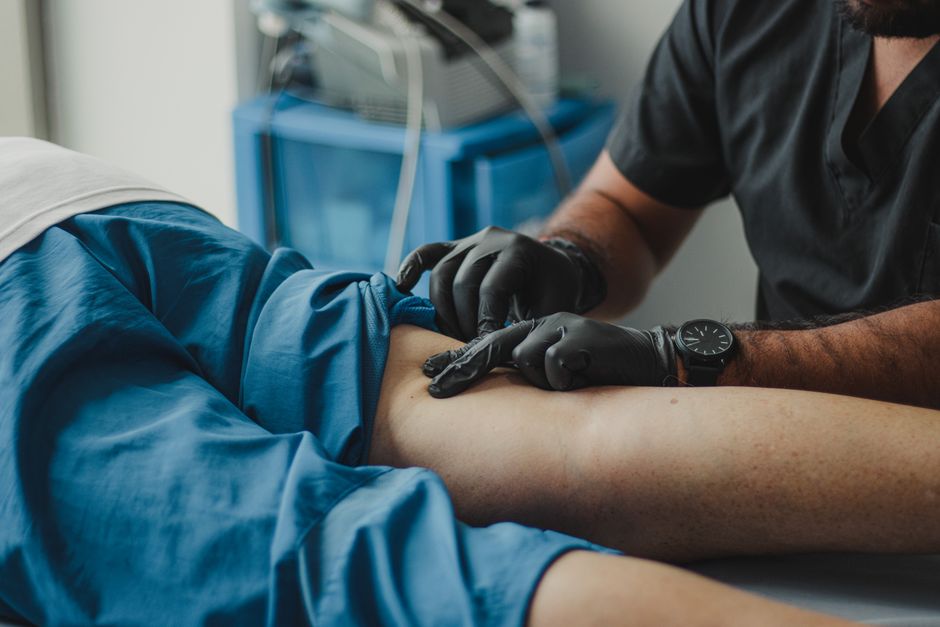
I see people tape joints that are clearly unstable — a wobbly ACL-deficient knee, a shoulder that dislocates mid-motion. That’s dangerous. A thin cotton bandage cannot replace a ligament. If your joint gives way, slides, or locks, you need a hinged brace, not tape. Using a flimsy bandage gives you false confidence that can lead to a worse injury.
The same goes for chronic inflammatory arthritis flares. A lidocaine patch may numb the surface, but the real problem is deep inside the joint capsule. In that case, you’re masking a flare that needs actual medical management. If you’re reaching for a patch every damn morning, it’s time to see a rheumatologist, not the drugstore aisle.
And if you have a skin condition like eczema or psoriasis, skip the adhesives. Tape and patches can trigger a vicious rash that’s harder to treat than the original joint pain. In those cases, an elastic sleeve without adhesive or simply compression shorts might be a better bet.
Bottom line: For knee pain during a run, KT Tape Pro applied correctly is the best quick fix. For swelling after a sprain, an ACE bandage wrapped with mild graduated compression beats any patch. If you need hours of numbing relief without moving, a Salonpas lidocaine patch is your safest bet. Stop wasting money on cheap generic tape that peels in an hour and leaves adhesive goo behind. Apply it right, use it for the right reason, and a ten-dollar roll might actually earn its keep.
Medical Disclaimer: This content is for informational purposes only and does not constitute medical advice. Always consult a qualified healthcare professional before making health-related decisions.