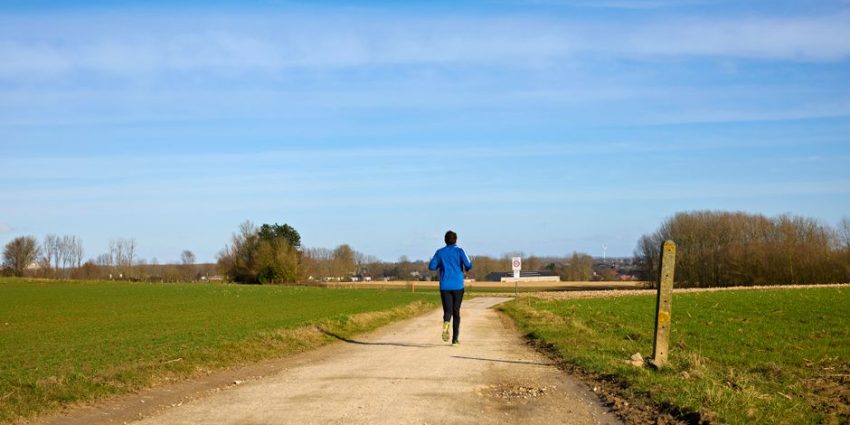
Start with run-walk intervals, not a heroic first run. Your lungs may remember running before your calves, feet, tendons, and joints do. The smartest spring comeback feels almost too easy for the first two weeks. That is the point.
How should you start running again in spring?
Begin with an easy effort
Your first outdoor session should last 25 to 30 minutes, including walking. Walk for five minutes, then alternate one minute of relaxed running with two minutes of walking for 20 minutes. Finish with another five-minute walk. Keep the running pace slow enough to speak a full sentence without gasping. If you cannot do that, slow down.
Repeat this session two or three times during the first week, with at least one rest day between runs. A flat, familiar route beats a steep trail covered in wet leaves. Spring weather changes quickly, so choose daylight, dry pavement, and a route where you can turn home without adding extra distance.
Let your tissues catch up
Cardiovascular fitness often returns faster than tissue tolerance. Your heart may feel ready for 30 minutes, while your Achilles tendon or shin muscles need several weeks to handle repeated impact. That mismatch causes many spring running injuries. Stop each session while your stride still feels normal. A little tired is fine. Limping, protecting one side, or landing heavily means the session has already gone too far.
Verdict: For getting back to outdoor running in spring, three short run-walk sessions beat one ambitious run every time.
How fast should you build outdoor running volume?
Increase time before speed
Use a four-week progression based on total running time, not pace. The first target is consistency. The second is longer easy running. Speed comes last because faster running increases force and usually exposes weak points sooner.
| Week | Sessions | Run-walk format | Main target |
|---|---|---|---|
| 1 | 3 | 1 minute run, 2 minutes walk for 20 minutes | Finish fresh |
| 2 | 3 | 2 minutes run, 2 minutes walk for 24 minutes | Keep effort easy |
| 3 | 3 | 4 minutes run, 2 minutes walk for 24 minutes | Build relaxed running time |
| 4 | 3 | 8 minutes run, 2 minutes walk for 30 minutes | Test steady endurance |
This schedule is a starting point, not a race. Repeat a week if your legs feel beaten up, your soreness lasts more than 48 hours, or your next session feels worse instead of better. The CDC advises starting slowly and building toward regular activity; its guidance also links a larger jump between usual activity and new activity with greater injury risk. CDC activity guidance supports the same basic rule: add small amounts, then give your body time to adapt.
Change one variable at a time
Do not add distance, hills, speed, and extra days in the same week. Pick one. The cleanest progression is to extend the running portions while keeping the route flat and the pace easy. Once you can complete three sessions without lingering soreness, add a small amount of time. Five extra minutes is enough.
Easy effort should control every run for the first month. You should finish with the sense that you could have continued for another five minutes. If you finish exhausted, the workout was too hard for a comeback run.
Which running gear helps you restart safely?
Choose comfort and fit over hype
Running shoes solve a simple problem: they give you traction, cushioning, and a stable fit on hard ground. They do not cancel poor pacing or guarantee injury prevention. Replace shoes that feel compressed, uneven, or painful, especially if the midsole has lost its spring.
| Product | Useful detail | Typical U.S. list price | Best use |
|---|---|---|---|
| Brooks Ghost 16 | 10 mm drop; about 283 g in a men’s sample size | $140 | Reliable daily road miles |
| ASICS Gel-Nimbus 27 | 8 mm drop; high-cushion road design | $165 | Soft feel for hard pavement |
| Hoka Clifton 10 | 8 mm drop; about 277 g in a men’s sample size | $150 | Light, cushioned easy runs |
| Saucony Ride 18 | 8 mm drop; neutral daily trainer | $140 | Balanced everyday training |
| Garmin Forerunner 165 | GPS watch with up to 19 hours of GPS battery life | $249.99 | Tracking time without carrying a phone |
Prices can change by retailer and size. My pick for most returning road runners is the Brooks Ghost 16 because its straightforward fit and moderate cushioning make it an easy daily trainer. Choose the ASICS Gel-Nimbus 27 if soft cushioning matters more than weight. Pick the Hoka Clifton 10 if you prefer a lighter-feeling shoe. The Garmin Forerunner 165 is useful only if seeing pace data will not make you run too fast.
Know when not to buy new gear
Do not buy a GPS watch to solve a pacing problem. Set a simple time limit on your phone instead. Do not buy carbon-plated racing shoes for a gentle comeback; they are built for faster efforts, not for relearning basic tolerance. Do not replace shoes solely because a new color launched. If your current pair fits well, has even wear, and feels comfortable during walking, keep using it.
What mistakes derail a spring running comeback?

Use this pre-run checklist
- Check the route for wet leaves, ice, potholes, and poor visibility.
- Walk for five minutes before the first running interval.
- Set a time limit before you leave so motivation does not extend the workout.
- Keep the first ten minutes slower than your ego wants.
- Take at least one rest day between running sessions.
- Write down the total time, surface, weather, and how your legs felt the next morning.
Drop these common shortcuts
- Do not match your pace from last spring on the first week back.
- Do not use a long weekend to make up for missed sessions.
- Do not add hills because flat running feels easy.
- Do not stretch aggressively over sharp pain.
- Do not treat soreness in one exact spot as normal if it worsens during the run.
The biggest mistake is confusing motivation with readiness. Motivation says you can run farther. Readiness means you can repeat the workload without a worsening response. Track the second one.
Strength work helps too, but keep it basic: two weekly sessions of calf raises, split squats, glute bridges, and controlled step-downs. Use one or two sets of 8 to 12 repetitions at first. The goal is steady practice, not a leg workout that ruins your next run.
When should you stop running or switch to walking?

What discomfort can you watch?
General muscle heaviness that improves as you warm up can be manageable. Mild stiffness that clears by the next day is different from pain that changes your stride. Keep the session easy, and see how your body responds over the next 24 hours. A repeated warning signal deserves more attention than a single tired run.
What pain means stop?
Pain that changes your stride is a stop sign. So are sharp pain, swelling, numbness, sudden weakness, chest pain, fainting, or unusual shortness of breath. Walk home or arrange a ride. Do not test the pain with one more interval. If knee pain does not settle after a week away from running, the NHS advises getting it checked by a GP or physiotherapist; severe pain or swelling needs prompt medical attention. NHS running injury guidance explains the same stop-and-check approach.
When should you get professional advice?
Speak with a clinician before increasing vigorous exercise if you have heart or lung disease, uncontrolled high blood pressure, a recent operation, a major injury, or a condition that limits activity. A physical therapist can also help if the same pain returns each time you run. That is not overreacting. It is faster than losing another six weeks.
Final recommendation: Use three easy run-walk sessions per week, repeat weeks when your body needs more time, and postpone speed until you can run comfortably with a normal stride. For most people restarting this spring, patience is the piece of equipment that matters most.
Always consult a qualified healthcare professional before making health-related decisions.