Cold weather does not stop your body from exercising. It stops many people from wanting to leave a warm house. That is a planning problem, not a fitness problem. A living room, hallway, staircase, or spare bedroom can support a useful cardio session with no gym membership and very little equipment.
The best indoor cardio workouts for cold winter days raise your breathing rate without turning every session into a punishment. Use the plan below to build a repeatable 30-minute routine, choose the right setup for your space, and avoid the mistakes that make home workouts feel harder than they need to be.
What makes an indoor winter cardio workout effective?
The best target is steady moderate effort with short bursts of higher effort. You do not need to sweat heavily for an hour. You need enough repeated movement to challenge your heart and lungs, then enough recovery to keep your form under control.
Use the talk test before chasing heart-rate numbers
At moderate intensity, you should be able to speak in short sentences but not hold a relaxed conversation. If you can only say a few words, reduce the pace or take a longer recovery. If you can sing comfortably, add speed, arm movement, resistance, or a small incline.
Heart-rate watches can help, but they are not required. For a simple effort scale from 1 to 10, spend most of the workout around 5 or 6 and use 7 or 8 only during brief intervals. Beginners should stay closer to 5 until the movements feel familiar.
Choose a workout that matches your joints and floor space
| Workout | Space needed | Best effort pattern | Low-impact option |
|---|---|---|---|
| Marching with arm swings | About 6 by 4 feet | 2 minutes steady, 30 seconds fast | Keep both feet close to the floor |
| Stair walking | One staircase | 1 flight up, 1 minute recovery | Use the bottom step only |
| Shadow boxing | About 6 by 6 feet | 45 seconds work, 30 seconds easy | Punch at chest height without pivots |
| Indoor walking | Hallway or open room | 5 minutes steady, 1 minute brisk | Shorten your stride |
For most people, indoor walking with short speed changes is the safest starting point. It gives you control over impact, balance, and temperature. The clear verdict: build consistency with moderate, low-impact movement first, then add jumping or sprint-style intervals only after your knees, ankles, and feet tolerate the basic work.
How to complete a 30-minute indoor cardio session
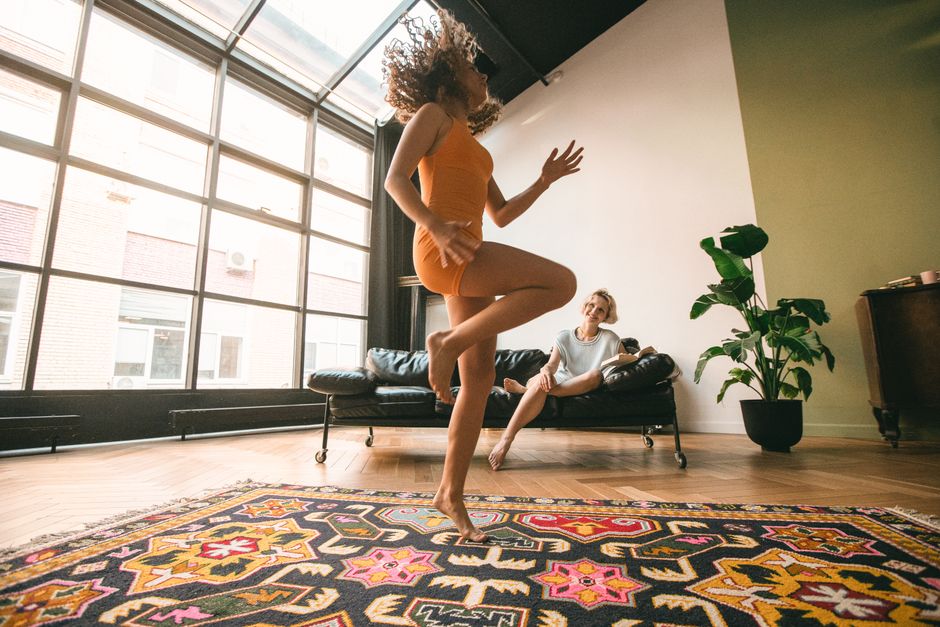
Set a timer before you start. The structure below removes the usual question of what to do next and keeps the session short enough for a cold morning or dark evening.
Step 1: Warm up for five minutes
- March in place for 90 seconds at an easy pace.
- Circle your shoulders forward and backward for 30 seconds.
- Alternate heel taps in front for 60 seconds.
- March with larger arm swings for 60 seconds.
- Walk around the room and gradually increase your pace for 60 seconds.
Step 2: Use four rounds of work and recovery
- Work for two minutes at a 5 or 6 out of 10 effort. Use brisk walking, step-ups, cycling, rowing, or marching.
- Increase the pace for 30 seconds at a 7 out of 10 effort. You should breathe hard but keep your movement controlled.
- Recover for 90 seconds at an easy pace. Keep moving instead of sitting down.
- Repeat the three-part block four times. Change the movement each round if one pattern becomes uncomfortable.
Step 3: Cool down for five minutes
Slow to an easy walk for three minutes, then use two minutes of gentle calf, hip, and chest stretches. Do not force a stretch or bounce into it. The full session takes 30 minutes: five minutes warm-up, 20 minutes intervals, and five minutes cool-down.
For a harder workout, add one more 30-second fast interval to each round. For an easier workout, remove the fast interval and make the steady portion three minutes. The main rule is simple: finish feeling worked, not wrecked.
Which indoor cardio setup fits your space?
Equipment can make winter exercise easier to repeat, but the most expensive option is not the automatic winner. Start with the movement you can perform without pain, noise complaints, or a long setup process.
Best choices by budget and training goal
| Option | Typical US price | Useful specifications | Best verdict |
|---|---|---|---|
| Nike Training Club | $0 | Bodyweight strength, mobility, and cardio sessions in several time lengths | Best free choice for guided variety |
| Sunny Health & Fitness SF-B1002 | About $300 | Indoor cycling bike with a heavy flywheel and adjustable resistance | Best for quiet seated cardio on a modest budget |
| Concept2 RowErg with PM5 | About $990 | Air resistance, performance monitor, 96-inch length, folds upright for storage | Best full-body machine if you have floor and storage space |
| Peloton Bike+ | About $2,495 before membership | 21.5-inch rotating screen, magnetic resistance, structured cycling classes | Best for people who need scheduled coaching |
When not to buy a cardio machine
Do not buy a treadmill, bike, or rower to solve a motivation problem that a 10-minute walking routine would solve. Large machines need floor space, maintenance, and a plan for noise. The Concept2 RowErg is excellent for measurable full-body work, but its 96-inch length makes it a poor fit for a small apartment unless you can store it upright. The Peloton Bike+ is polished and motivating, yet its total cost makes no sense if you rarely follow scheduled classes.
For most beginners, the best purchase is the one that removes the biggest barrier. Choose a bike for low-impact seated cardio, a rower for full-body training, and a free app for variety. If you have no clear barrier beyond cold weather, buy nothing first and complete the 30-minute bodyweight plan for two weeks.
How hard should winter cardio feel?

Keep most sessions comfortable enough to repeat tomorrow. A workout that leaves you sore for four days will not build a strong winter routine.
Am I training hard enough?
Use breathing and recovery. During a fast interval, breathing should become heavy, but you should still control your feet and posture. Within two minutes of easy movement, your breathing should begin to settle. If it does not, lower the intensity in the next round.
What if I have not exercised for months?
Start with 15 minutes: five minutes easy, six minutes of alternating 30 seconds brisk and 60 seconds easy, then four minutes of slow walking. Add five minutes each week until you reach 30 minutes. Do not begin with jumping, deep squats, or all-out sprints just because the session feels short.
People with chest pain, unexplained dizziness, severe shortness of breath, or a diagnosed heart or lung condition should stop and seek medical guidance before increasing intensity. A lower-impact plan is still real cardio. The goal is controlled work that you can repeat, measure, and gradually extend.
What causes indoor winter workouts to fail?
My strongest recommendation is to remove friction before adding intensity. Put your shoes beside the workout area, choose the session before bedtime, and keep a backup routine for days when your energy is low.
Fix these common mistakes
- Starting cold: Spend five minutes warming up. Stiff ankles and hips make fast movements feel worse than they should.
- Going too hard: Replace all-out intervals with a 7 out of 10 effort. Save maximal work for occasional testing, not every session.
- Ignoring noise: Use marching, cycling, or shadow boxing instead of repeated jumps on hard floors. A thin exercise mat can reduce slipping, but it will not make loud landings silent.
- Using poor ventilation: Crack a window or lower the thermostat. A warm room can make a moderate workout feel unusually difficult.
- Repeating one painful movement: Swap step-ups for walking, jumping for heel taps, or deep knee bends for shallow sit-to-stands.
Use a backup plan for the coldest days
When motivation is low, perform three rounds of two minutes marching, one minute shadow boxing, one minute easy walking, and 30 seconds of calf raises. That takes 13 and a half minutes with no equipment. If you feel better, repeat it once.
The opening problem was a warm house that made outdoor exercise feel impossible. The solution is not heroic effort. It is a ready indoor routine, a sensible intensity, and a fallback session you can begin before your brain talks you out of it.
Always consult a qualified healthcare professional before making health-related decisions.